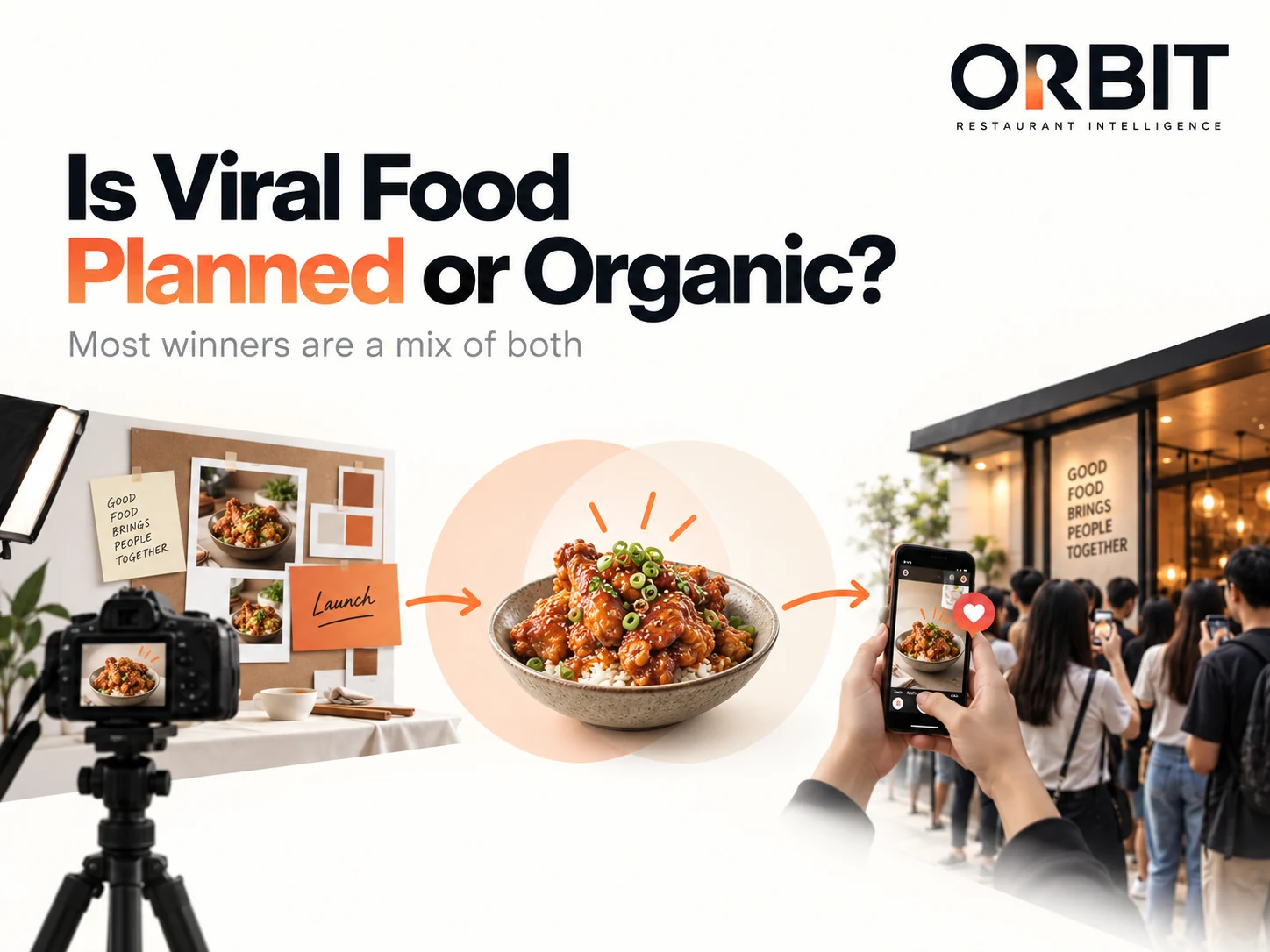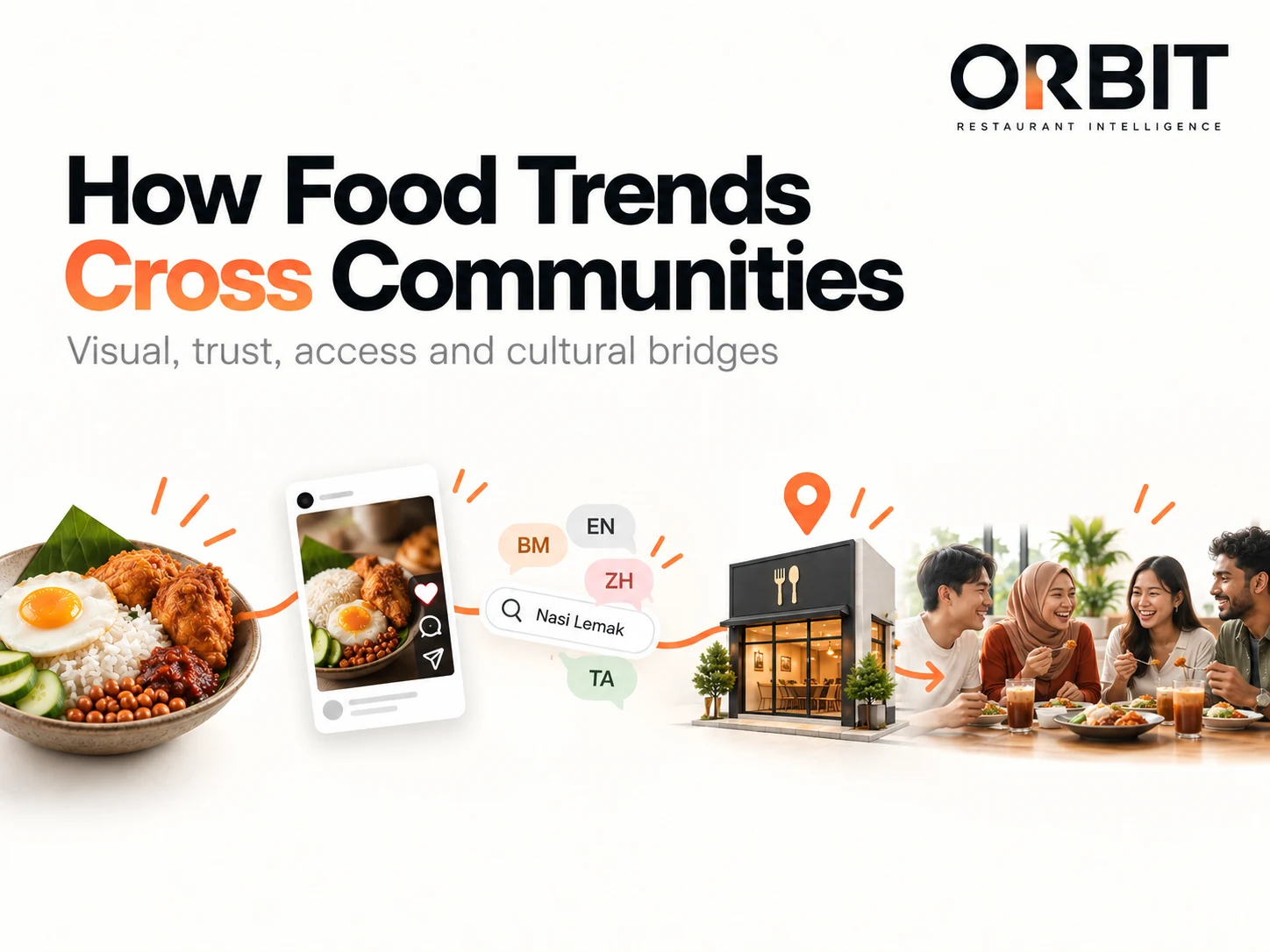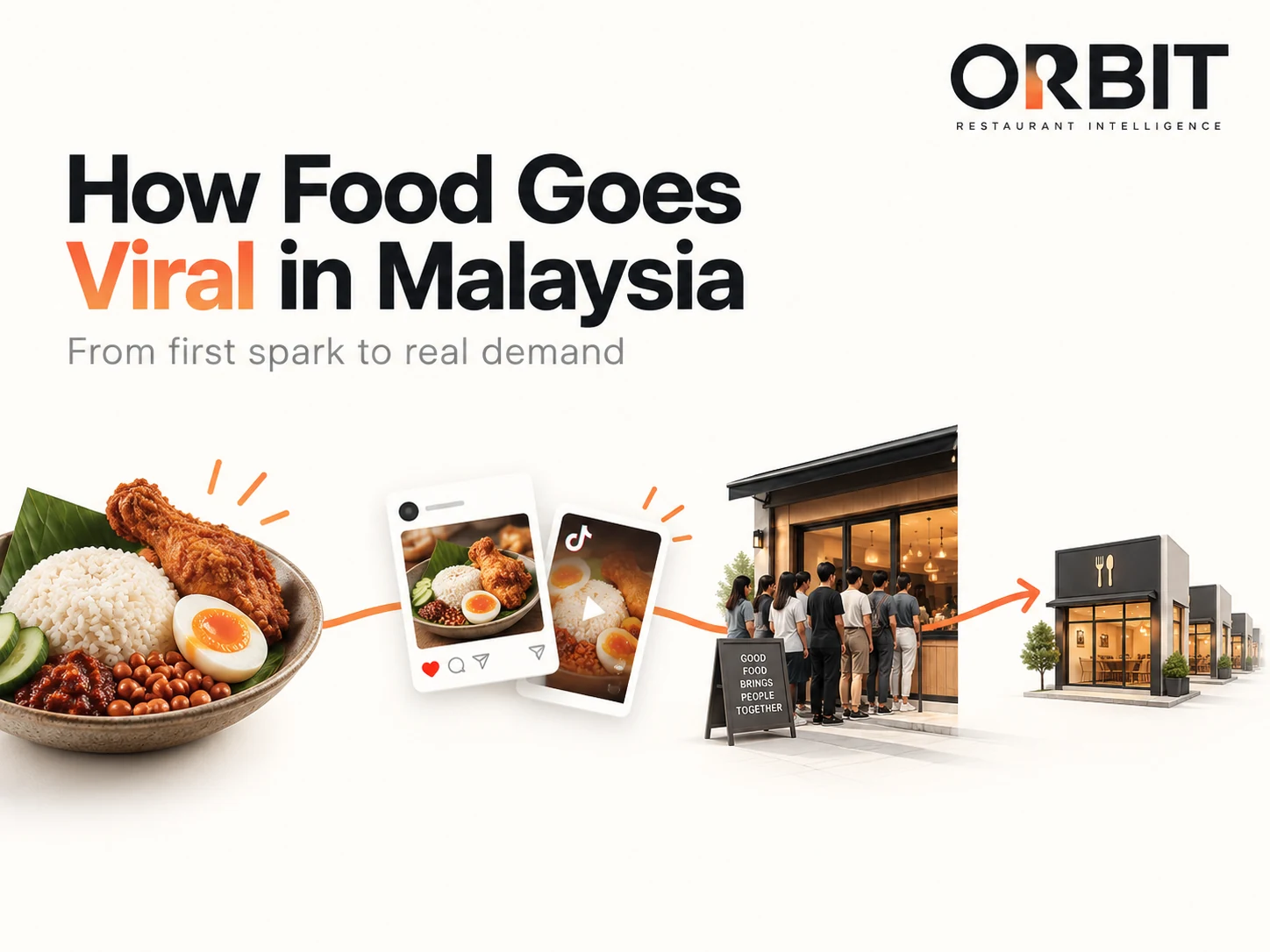
What Traits Do Viral Foods Have in Common?
The common pattern is not one ingredient or visual trick. It is a combination of clear value, low comprehension friction and easy social reproduction.

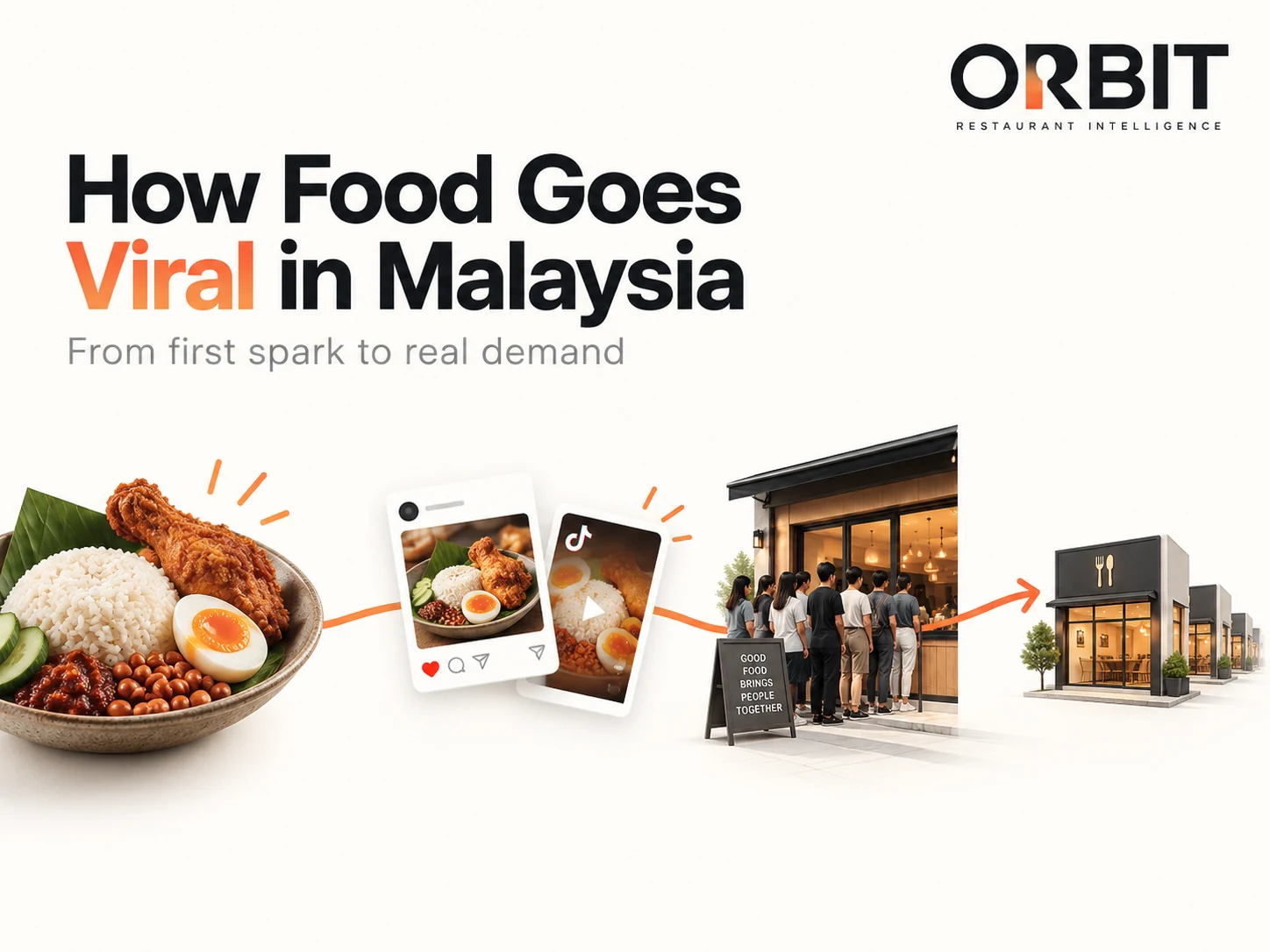
There is no single “viral food recipe.” Our strongest evidence points to a combination of relative advantage and compatibility: people need an obvious reason to care, while still being able to understand the product quickly. Different foods can ignite through spectacle, value, convenience, identity, challenge or story. What becomes more consistent after ignition is legibility, observable payoff, social transmission, reproduction and network escape.
Key takeaways
- The hook can varySpectacle, convenience, challenge, identity, scarcity, value and story can all start attention.
- Compatibility mattersFamiliarity reduces the mental and behavioural friction of trial.
- The payoff must be visiblePeople need to understand what is different before they spend.
- Propagation is socialA product becomes more interesting when customers can explain, perform, compare or reproduce it.
There is no single trait shared by every viral food
The easiest mistake is to reverse-engineer a successful trend and turn every visible characteristic into a cause. Dubai chocolate has a dramatic cross-section, so one might conclude that every viral food needs a reveal. Ayam gepuk has a spice challenge, so one might conclude that extremity causes virality. Baked feta pasta spread with almost none of those features.
The research is more useful when traits are grouped by the job they perform. A product needs some reason to win initial attention, but different products can satisfy that job differently.
| Job | Possible mechanism | Example form |
|---|---|---|
| Create initial interest | Novelty, value, convenience, sensory payoff, identity, challenge | Molten centre, cheap set meal, easy recipe, “level 10” spice |
| Reduce comprehension cost | Familiar base, clear name, known occasion | Croissant + salted egg; chicken + sambal |
| Demonstrate the difference | Cut, pour, crack, compare, queue, customer reaction | Process-focused food content |
| Create conversation value | Surprise, usefulness, controversy, status, discovery | “Would you wait three hours for this?” |
| Enable reproduction | Remake, review, rank, visit, challenge, remix | Customer becomes the next piece of content |
| Escape the original network | Different communities carry the same proposition | Foodie circle → students → family audiences → another city |
That is why a checklist of surface traits tends to fail. The more useful question is whether the product has a strong information advantage: something people can understand and transmit without much friction.
The strongest product-level evidence: advantage plus compatibility
Three 2026 experiments involving 1,648 participants tested how classic diffusion-of-innovation attributes affected intention to click, make and share healthy recipe posts. The two attributes that consistently predicted engagement intentions were relative advantage and compatibility. Complexity and trialability were much less consistent.1
For restaurant products, relative advantage means the consumer can answer: “Why this rather than the normal version?” Compatibility means the answer still fits a familiar taste, occasion, budget, cultural repertoire or eating habit.
A systematic review of 182 novel-food studies points in the same general direction: unfamiliarity, neophobia, fear and disgust can suppress acceptance, while familiarity and curiosity can support it.2
| Too familiar | Useful middle | Too unfamiliar |
|---|---|---|
| Nothing to explain, but little reason to talk | Recognisable base with a salient improvement or mutation | High novelty but high education/risk cost |
| Ordinary chicken rice | Boneless ayam gepuk with a clear spice proposition | A product consumers cannot identify or place in an occasion |
| Standard croissant | Salted egg croissant | A visually confusing food with no familiar reference |
This does not mean “familiar + twist” is a law. It means it is a plausible low-friction design pattern: enough novelty to create information value, enough compatibility to make trial psychologically easy.
The payoff should be observable before purchase
Restaurant-photo experiments found that process-focused food photos increased purchase intention more than final-outcome photos, mediated by perceived experiential value and perceived food quality.3 That finding helps explain why cutting, pouring, cracking, torching, stretching or reacting are so common in food content: they make the benefit legible.
But spectacle is only one form of observability. “RM10 set lunch,” “ready in five minutes,” “only three ingredients,” or “100 portions today” are also observable propositions. The deeper principle is not that every product needs a cheese pull. It is that the advantage should be easy to see, understand or verify.
- 1Recognise the base
The viewer knows what category or occasion the product belongs to.
- 2Notice the difference
One or two features answer “why this?”.
- 3Imagine the experience
Process, description, price or customer reaction lets the viewer simulate the payoff.
- 4Decide whether it is worth action
The consumer moves from curiosity toward search, save, visit or purchase.
The product has to give people something worth transmitting
Social modelling of eating is unusually robust. A review of 69 experiments involving more than 5,800 participants found significant modelling effects in 64 studies, with stronger effects when people identified with or wanted affiliation with the model.4
That matters because food virality is not just an information problem. Food is social evidence. A person eating, waiting, ranking, reacting or returning provides behavioural information to the next person.
The Malaysian examples in our case set use very different hooks: salted egg croissants offered an obvious molten-centre reveal and scarcity narrative; burger bakar turned a familiar burger into a larger, grilled local format; Gepuklah combined an established ayam gepuk category with a recognisable creator and altered product design; Dubai chocolate carried a distinct pistachio-kunafa system that local sellers could adapt into multiple formats.5678
The commonality is not one ingredient. It is an easy-to-understand reason to care that other people can carry forward.
A six-question pre-launch audit for restaurant owners
Before you call something “viral-ready,” ask:
- 1. What is the relative advantage? If the difference takes a paragraph to explain, it may be too weak or too complicated.
- 2. What familiar reference lowers the risk? Category, flavour, meal occasion, price band or cultural format.
- 3. Can the payoff be demonstrated? Through process, price, comparison, reaction or visible outcome.
- 4. Why would a customer tell someone else? Utility, surprise, status, debate, identity, discovery or challenge.
- 5. Can customers make their own version of the story? Review it, rank it, challenge it, remix it or bring friends.
- 6. Would the proposition still work outside your existing audience? If the story only makes sense to your current followers, network escape may be weak.
This audit should not be used as a scoring formula. The evidence does not justify universal weights or a “viral score.” It is a way to identify whether a proposed product has a clear transmission mechanism before money is spent on amplification.
Separate ignition traits from propagation traits
One reason viral-food advice becomes contradictory is that people mix together what starts attention with what allows attention to reproduce.
| Ignition trait | What it can do | Why it is not enough |
|---|---|---|
| Spectacle | Stops the scroll | May generate curiosity without purchase |
| Convenience | Creates practical value | May spread as a recipe rather than restaurant demand |
| Scarcity | Creates urgency | Can disappear when supply normalises |
| Identity | Creates belonging | May remain inside one community |
| Price shock | Creates strong utility | May attract deal-seekers with low repeat value |
| Challenge/extremity | Creates reaction content | Can reduce mainstream participation |
Propagation traits are different. The proposition needs to stay understandable when it leaves the original creator, it needs some reason for the next person to repeat it, and it needs enough compatibility that another audience can participate.
This distinction helps explain why one dramatic post can die immediately while an ordinary-looking product keeps spreading. The first may have a powerful ignition trait but weak propagation. The second may have modest ignition but excellent reproducibility.
What would raise our confidence further
The current trait model is supported by several independent literatures and Malaysian cases, but it is not yet a Malaysian predictive model. The next confidence jump would come from comparing successful breakouts with matched near-breakouts that had similar exposure but did not spread.
That dataset would let us ask questions such as: does compatibility predict breakout after controlling for creator size? Does process/reveal content predict search growth? Does source diversity outperform total creator count? Do local-origin and foreign-origin products differ once novelty and price are controlled?
Until that exists, restaurant owners should use the traits as a disciplined design checklist, not as a probability score.
Research notes & sources8 sources
How this article was researched
We looked for traits supported by experimental or systematic-review evidence and then pressure-tested them against very different Malaysian and international food breakouts. Surface features such as scarcity, foreign origin and extreme visuals were treated as optional amplifiers, not universal requirements.
- Adair et al. — Using Diffusion of Innovations Theory to Predict Engagement with Healthy Recipe Posts
Three 2026 studies (N=543, 805, 300). Relative advantage and compatibility consistently predicted intentions to click, make and share recipes. - Consumers’ perception of novel foods — systematic review
Systematic review of 182 studies. Familiarity and curiosity increased acceptance; disgust, fear and food neophobia were major rejection drivers. - Process vs. outcome food photos and restaurant purchase intention
Two experiments found process-focused food photos produced higher purchase intention than outcome-only photos through perceived quality and experiential value. - Cruwys et al. — Social modeling of eating: a review
Review of 69 experiments with more than 5,800 participants; 64 found significant modelling effects. - Malay Mail — Crazed about croissants
Contemporary commentary describes the salted egg croissant as a social-media sensation and notes the familiar liu sha bao reference point. - Free Malaysia Today — The burger joint you should go to
2012 report on Burger Bakar Kaw Kaw: social buzz, waits up to two hours and reportedly more than 1,000 burgers sold nightly. - SAYS — Ming Chun opens his own ayam gepuk stall in PJ
April 2026 interview and opening report. Documents the creator’s category focus, product differences and large queues. - Malay Mail — pistachio-kunafa fever in KL
2024 Malaysian market scan documenting local bars, croissants, cookies and other adaptations of the Dubai chocolate format.
What this research cannot proveLimitations
These traits are not a validated Malaysian prediction formula. They describe recurring mechanisms and should be tested against matched failed launches before ORBIT claims numerical lift or causal probabilities.