Why Is a Lower-Rated Restaurant Busier Than Mine?
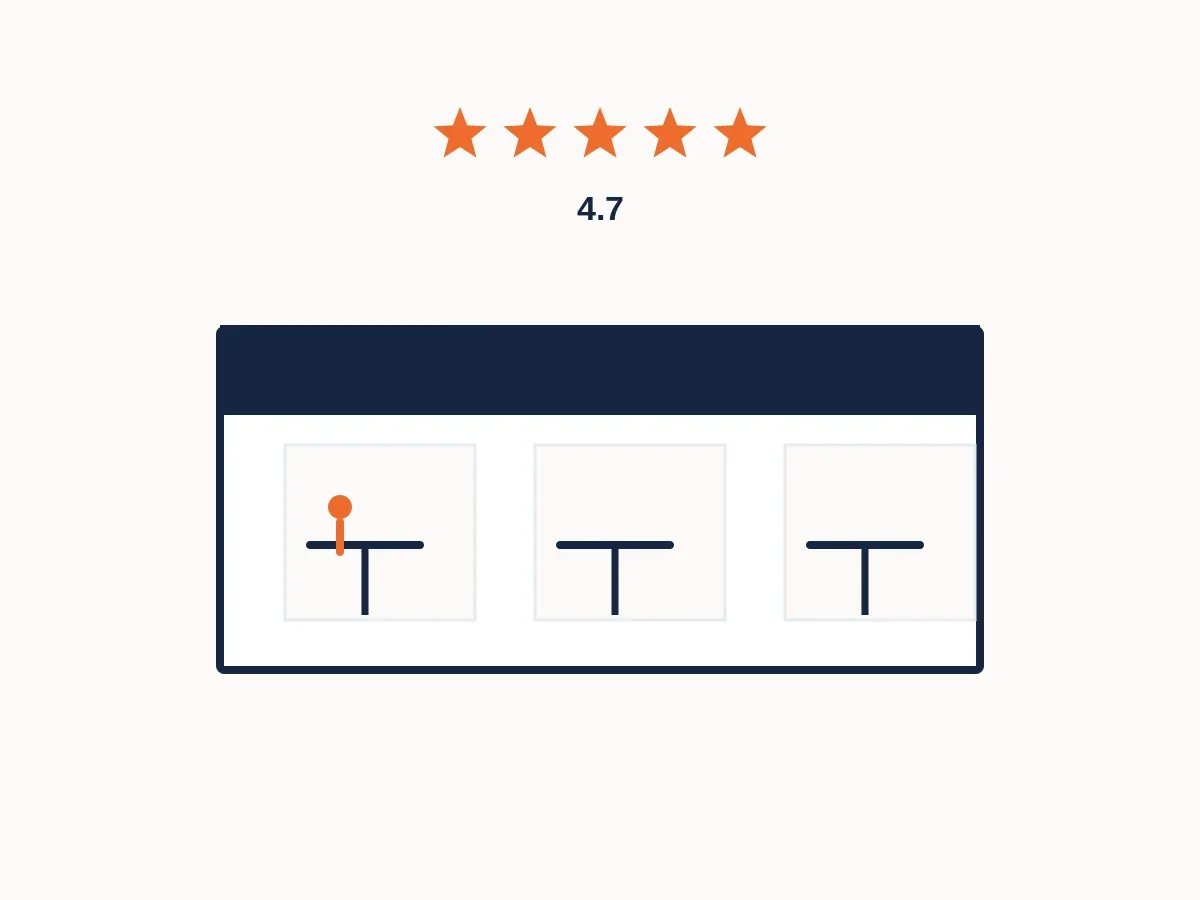
A star rating summarises feedback from people who reviewed the restaurant. Busyness reflects a much wider system of demand, choice, convenience, capacity and repeat behaviour.

A star rating summarises feedback from reviewers; a busy dining room reflects demand, convenience, familiarity, capacity, occasion fit and repeat behaviour.
The lower-rated restaurant may simply be easier to choose, easier to reach or better suited to the situations generating the most demand.

A rating describes reviewed experiences, not total market demand
The average score is produced by customers who left reviews. It says little about the number of people who considered the restaurant but did not go, the number who visited without reviewing, the size of the local demand pool or the practical ease of choosing the restaurant.
A 4.4-star restaurant with thousands of familiar repeat customers may be busier than a 4.7-star restaurant with fewer reviews, narrower occasion fit or weaker local discovery. The number is useful, but the market around the number matters.
Review averages also compress disagreement. A restaurant with a 4.3 score may have a huge base of repeat customers who value speed and price, while a 4.7 restaurant may serve a narrower, less frequent occasion. Neither rating tells you visit frequency or total addressable demand by itself.
Busyness can come from factors the rating barely captures
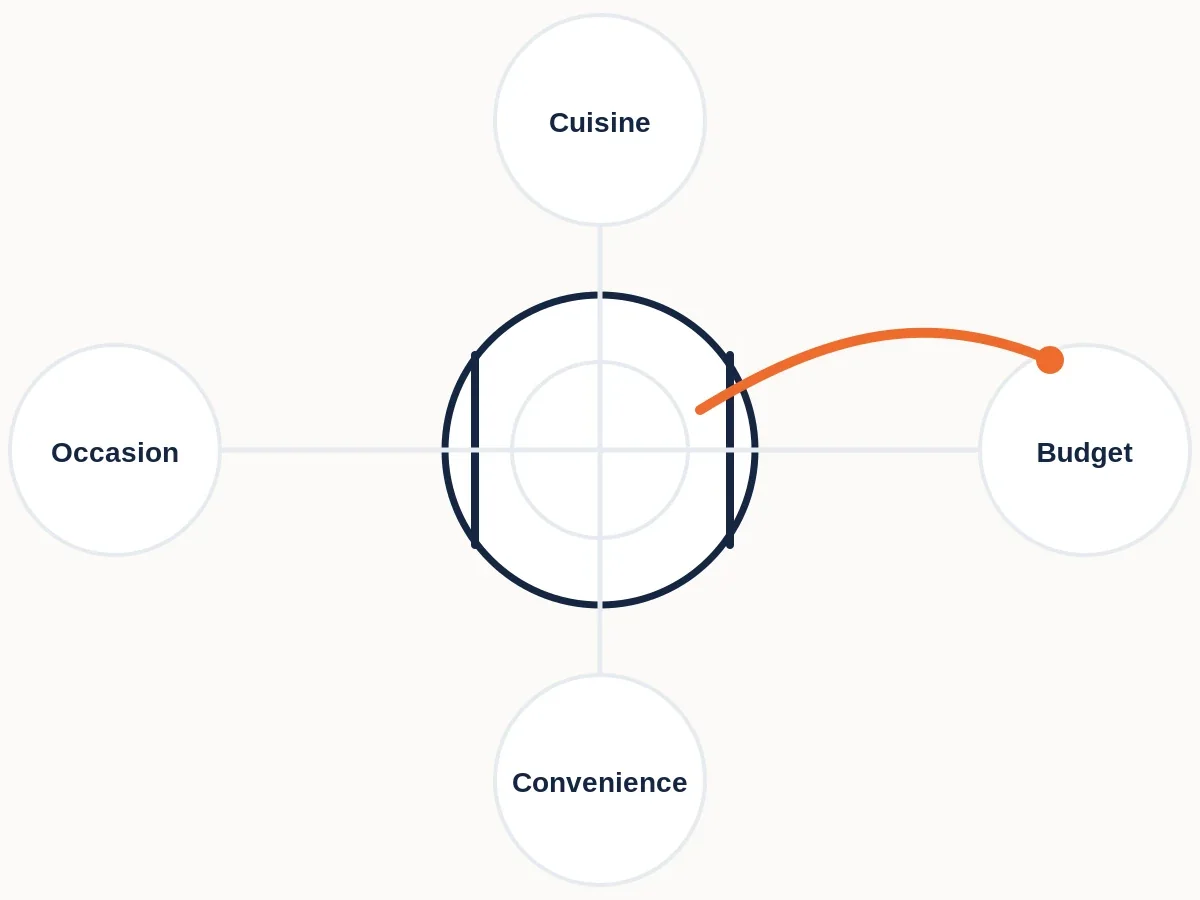
Location can create steady convenience demand. Fast table turnover can make a restaurant look consistently active. A broad menu can make group decisions easier. A familiar brand can reduce perceived risk. Lower prices can fit frequent-use occasions. Strong word of mouth can sustain traffic even when the online average is not the highest in the area.
Operational capacity also matters. Two restaurants can have similar demand but look very different if one has more seats, faster service or a queue visible from the street.
The visible crowd can also be misleading. A small shop with ten tables can look full with far fewer customers than a larger restaurant operating at the same percentage of capacity. Queue visibility, takeaway volume and peak-time concentration can all change what “busier” looks like from outside.
Reviews can influence visits without explaining the entire market decision.
A Malaysian study of 156 respondents reported significant relationships between positive reviews, negative reviews, food-quality reviews and intention to visit. In a separate 539-person Klang Valley study, online reviews ranked ninth overall among nine factors, while price ranked first. The studies ask different questions, so the correct lesson is not that one factor “wins”, but that restaurant choice is broader than the rating.
The Klang Valley ranking data were collected in 2017 and online behaviour has evolved since then. Treat the ranking as historical evidence of multi-factor choice, not a current national hierarchy.
Source: Abdul Hadi et al. (2020), eWOM: The effect of online review and food quality on the intention to visit a restaurant; Chua et al. (2020), Customer Restaurant Choice: An Empirical Analysis of Restaurant Types and Eating-Out Occasions
“A rating can describe experience without explaining market preference.”
ORBIT Library
Reviews still matter, just not in isolation
Malaysian research has found relationships between online reviews and intention to visit. But a separate Klang Valley restaurant-choice study ranked price, word of mouth and past experience ahead of online reviews overall in its 2017 sample, with priorities changing by occasion.
Those findings should not be used to claim that reviews are weak or price always wins. They show why a single visible metric cannot explain restaurant choice across every context.
The more useful comparison is to ask which advantages repeatedly support the competitor’s demand. If it wins on convenience, price clarity and habitual weekday use, improving your rating by 0.1 stars may have little impact on that specific competitive gap.
Do not try to beat a busy competitor by chasing their star score alone. First understand what job they are winning for customers.
What should you compare instead of stars alone?
- Review depth: score, volume, recency and recurring themes.
- Demand fit: which dining occasions the competitor appears to win repeatedly.
- Price and value: typical spend, bundles, portions and clarity of the offer.
- Convenience: location, parking, hours, queue, reservations and access.
- Familiarity and visibility: brand recognition, word of mouth, Maps presence and social discovery.
- Capacity and throughput: whether the visible crowd is partly explained by operating model rather than stronger preference.
Sources and context
Abdul Hadi et al. (2020), eWOM: The effect of online review and food quality on the intention to visit a restaurant; Chua et al. (2020), Customer Restaurant Choice: An Empirical Analysis of Restaurant Types and Eating-Out Occasions. These sources support the general explanation above. They do not diagnose any specific restaurant, and study findings should be interpreted within their sample, place and time period.
Compare more than the rating.
ORBIT examines the wider market around your restaurant to identify the competitive, value and customer-choice signals that may explain why another option is winning.