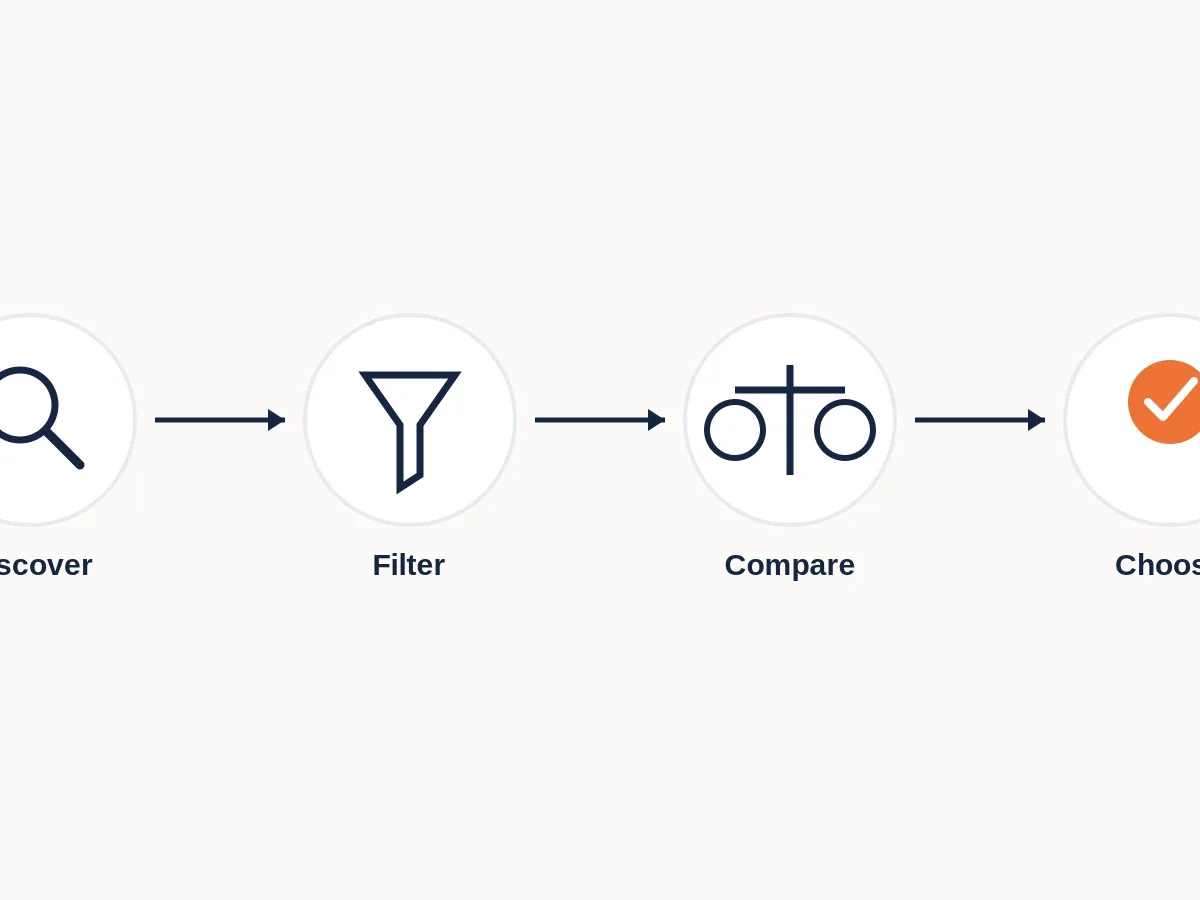
My Restaurant Has Good Reviews. Why Is It Still Quiet?
Strong reviews tell you something important about people who visited. They do not fully explain the people who considered your restaurant and chose somewhere else.

A strong rating and a quiet dining room can both be true. Reviews describe people who already visited; they do not capture the people who considered your restaurant and chose somewhere else.
That missing group matters because non-visitors can be stopped by price, location, menu fit, convenience or competing options without ever leaving a review.
What good reviews actually prove
A consistently strong review profile is useful evidence that many customers who visited were satisfied enough to leave positive feedback. Review text can also reveal what they valued, such as food quality, service, ambience, portion size or value.
That matters because reviews can influence later customers. But a rating is an aggregate. Two restaurants with the same score can have very different review volumes, recency, customer expectations and reasons for being chosen in the first place.
Read the distribution, not only the average. A restaurant can hold a strong score while recent reviews become less enthusiastic, while the review count grows slowly, or while one repeated friction appears inside otherwise positive comments. Those patterns can matter more operationally than a movement from 4.5 to 4.6 stars.
What reviews cannot see
Reviews are naturally biased toward people who completed the visit or purchase. Someone who saw your restaurant, checked the menu and chose another place usually leaves you no review. The same is true for a group that rejected the location because parking looked difficult or a customer who thought the menu did not fit the occasion.
Those lost decisions are commercially important precisely because they are mostly invisible inside the review score. A restaurant can therefore satisfy the customers it wins while still losing too many customers before the visit.
Imagine ten people consider the restaurant. Three visit and all three leave five-star reviews. The rating looks excellent, but the restaurant still knows almost nothing about the seven who chose another option. That gap is one reason review analysis and customer-choice analysis should not be treated as the same thing.
Online reviews matter, but they are not the whole choice decision.
A Malaysian study involving 156 respondents found significant relationships between positive online reviews, negative online reviews, food-quality reviews and intention to visit a restaurant. Separately, a 539-person Klang Valley restaurant-choice study found that the relative importance of selection factors changed by dining occasion.
The studies use different designs and should not be combined into one effect estimate. Together they support a narrower conclusion: reviews can influence intention, while restaurant choice still depends on a wider context.
Source: Abdul Hadi et al. (2020), eWOM: The effect of online review and food quality on the intention to visit a restaurant; Chua et al. (2020), Customer Restaurant Choice: An Empirical Analysis of Restaurant Types and Eating-Out Occasions
“Reviews explain the people who came. Quietness may be hiding among the people who never did.”
ORBIT Library
Why a strong rating may not translate into stronger demand
Discovery may be weak. The restaurant may be well liked but poorly matched to the occasions with the most local demand. A competitor may appear more convenient, familiar or clearly priced. The menu may be difficult to understand online. Review volume may be low even if the average score is high. Or the restaurant may have a strong reputation among one customer group but limited relevance to another.
The point is not that reviews are unimportant. It is that a review score should not be asked to explain a problem it was never designed to measure.
The competitive screen also matters. A 4.7 rating can look powerful in isolation and less distinctive if several nearby alternatives are rated similarly, have far more review volume, clearer menus or stronger familiarity. Customers rarely evaluate the number without context.
Good reviews are evidence of satisfaction. They are not proof that discovery, consideration or competitive preference is strong enough.
What should you investigate next?
Keep the review data, then add the missing layers around it.
- Discovery: Are enough relevant customers finding the restaurant in Search, Maps, social and word of mouth?
- Review depth: Look at volume, recency and recurring themes, not only the average star rating.
- Choice context: Which occasions does the restaurant naturally fit, and which nearby alternatives are stronger for those occasions?
- Decision friction: Check menu clarity, price and value perception, access, parking, hours, queue expectations and group suitability.
- Conversion signals: Compare profile views with directions, enquiries, bookings, orders or other actions where available.
Sources and context
Abdul Hadi et al. (2020), eWOM: The effect of online review and food quality on the intention to visit a restaurant; Chua et al. (2020), Customer Restaurant Choice: An Empirical Analysis of Restaurant Types and Eating-Out Occasions. These sources support the general explanation above. They do not diagnose any specific restaurant, and study findings should be interpreted within their sample, place and time period.
Look beyond the rating.
ORBIT examines the external market around your restaurant to surface the choice, competitor and value signals that a review score alone cannot show.