Who Actually Leaves Restaurant Reviews?
Most diners never leave a review. That means your review page is useful, but it is not a random sample of everyone who visited, let alone everyone who considered your restaurant.

What is restaurant review participation bias?
Short answer: restaurant review participation bias happens because the people who leave online reviews are self-selected, not randomly sampled from every customer. That means restaurant reviews can contain real experiences while still failing to represent everyone who visited.
People with very positive or very negative experiences may be more motivated to post, while many customers with ordinary experiences say nothing. Some customer groups may also participate in review platforms at different rates.
That does not make reviews fake or useless. It means a review page mainly tells you what reviewers chose to say after visiting. It cannot fully tell you what silent customers think, and it says almost nothing about people who considered your restaurant and went somewhere else. That is why this topic links closely to Good Reviews, But Still Quiet?.
Key idea: 1,000 reviews means 1,000 reviewers. It does not mean 1,000 random customers.
Are online restaurant reviews representative of customers?
Usually, only partly.
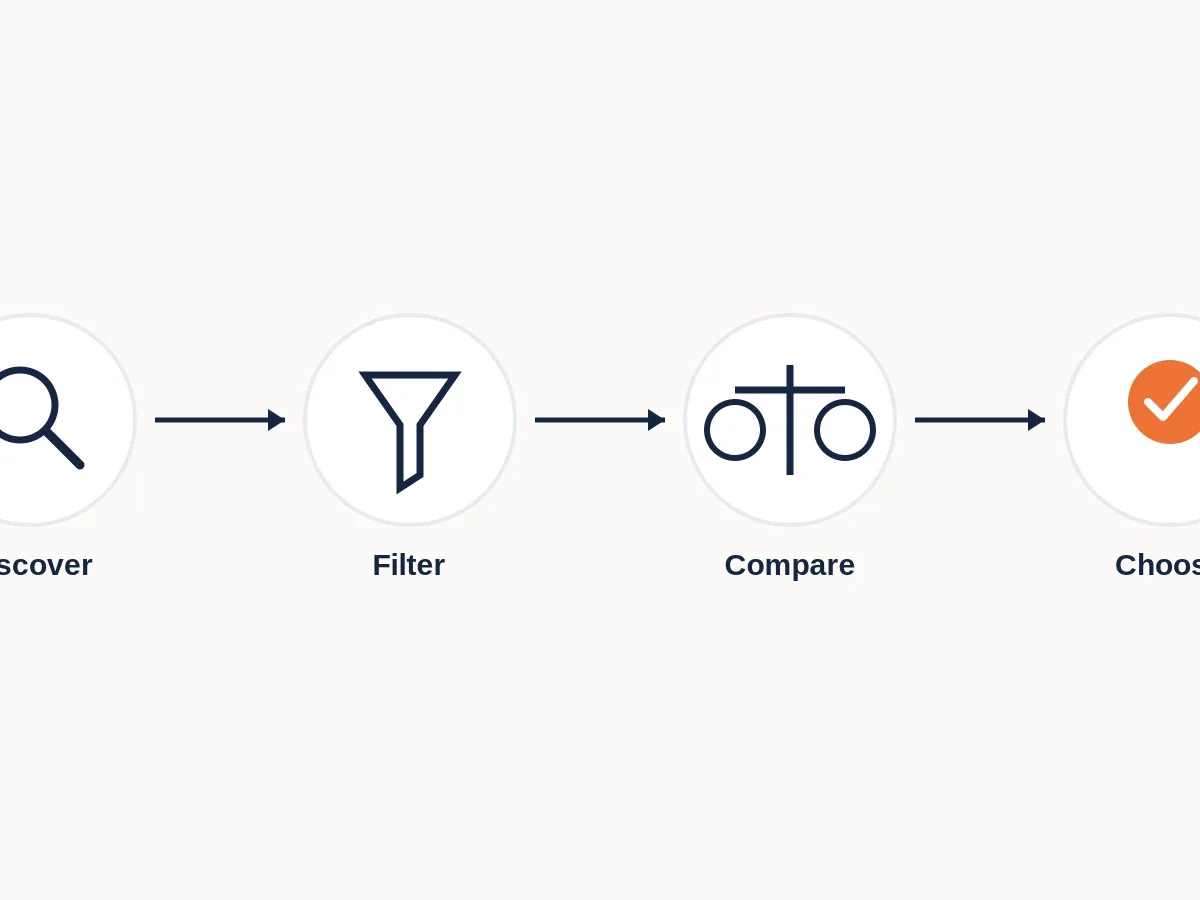
Think about how a review ends up online. There are several filters before the review even exists:
- Filter 1: consideration. Some people hear about the restaurant, look at the menu, check the price or parking, and never visit.
- Filter 2: the visit. Out of the people who considered the restaurant, only some become actual customers.
- Filter 3: the experience. Among visitors, some have a strong positive or negative reaction while others simply think the meal was okay.
- Filter 4: the review decision. Only a fraction of those customers decide it is worth opening an app and writing a review.
So when an owner looks at a review page, they are looking at the output of all four filters. That is very different from surveying everyone who ate there. And it is even further away from understanding everyone who almost visited, compared alternatives or rejected the restaurant before stepping in.
This is why a restaurant can have very positive reviews and still have weak demand. Reviews speak most clearly about people who already chose you. Growth problems often hide among the people who did not.
What the research supports
Online reviews are a selected slice of customers
Together, the evidence supports a practical conclusion: online restaurant reviews are useful signals, but they should not be treated as a complete picture of market demand.
“The loudest customer voice online is not always the most representative one.”
ORBIT Library
Why do most restaurant customers never leave a review?
Most meals are not dramatic enough to trigger public writing.
Some customers have a fantastic night and feel like sharing it. Some have a frustrating experience and feel like warning others. But a very large number of customers have a meal that is simply normal. They eat, pay, and move on with their day.
That quiet middle matters because it can make a restaurant look more polarised online than it feels in real life.
A Management Science study by Hülya Karaman compared private customer satisfaction information with later public review behaviour. One of the key takeaways was that unsolicited online review distributions tend to overrepresent stronger experiences. When customers were actively asked to review, more moderate experiences entered the sample, making the resulting review set more representative.
In plain language, that means something simple: if you wait only for spontaneous reviews, you are more likely to hear from people who felt something strongly enough to speak. If you ask for reviews more broadly, you have a better chance of hearing from the silent middle too.
That still does not create a perfect sample. But it does improve the picture.
Why do very good and very bad experiences show up more?
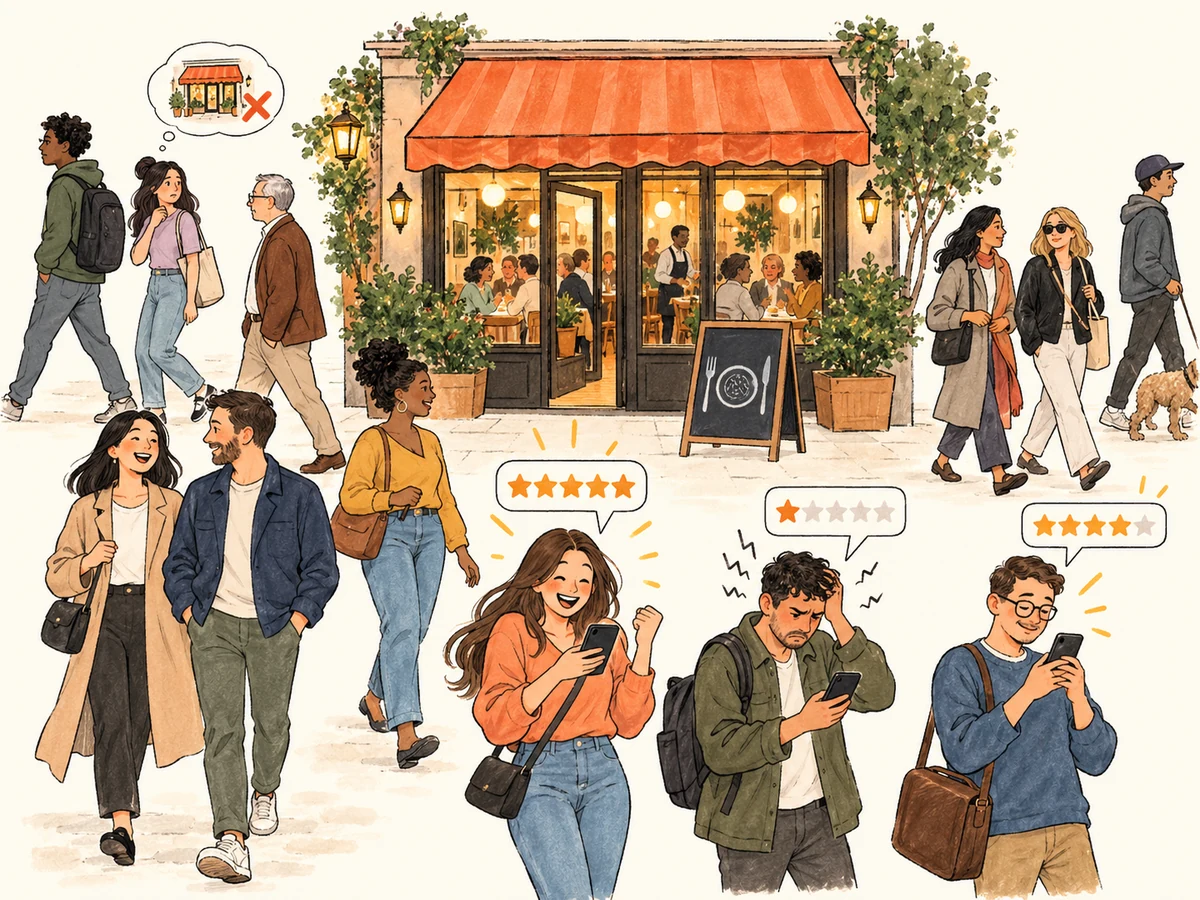
Imagine four customers leaving the same restaurant:
- One loved the food and posts immediately.
- One had a bad service experience and wants to complain.
- One thought it was decent, but not memorable.
- One thinks it was fine and forgets about it by the time they get home.
The first two customers are much more likely to appear online. The last two are more likely to disappear from view.
That is why you should be careful with assumptions like:
- “We have loads of positive reviews, so the whole market must love us.”
- “We got several complaints about parking, so parking must be equally important to every customer.”
Both could be partly true. But both could also be distorted by who chose to speak.
There is another layer too. Reviews do not only reflect experiences. Sometimes they also reflect the context in which the reviewer is writing. Research on Yelp restaurant reviews found evidence that existing average ratings can influence later ratings, especially for people whose experience was more moderate. So the review page can shape future reviews, not just the other way around.
Are some customers more likely to leave restaurant reviews?
Yes, and this is where newer restaurant research becomes especially interesting.
A 2026 study by Wang, Kuchmaner, Xu and Xu examined restaurant review activity alongside geospatial demographic information. The study found evidence that review-writing participation was not evenly distributed across all consumer populations. Some groups appeared more likely to be represented in review activity, while lower-socioeconomic-status populations appeared less likely to be represented.
The exact interpretation needs care. This kind of study does not let us identify every individual reviewer and label them neatly. But it does support the broader point that review participation can differ systematically across populations.
Another study by Han and Anderson also showed that platform matters. Who responds, who posts publicly and what they eventually rate can vary across review environments. That means “what customers think online” may look different depending on whether you are looking at Google, Yelp, TripAdvisor or another platform.
For restaurant owners, the practical message is straightforward: a review page may contain real customer experiences while still underrepresenting some kinds of customers and overrepresenting others.
Reviews are real experiences. But they are still the experiences of a selected group.
What reviews can tell you well and what they cannot
Reviews are powerful when you ask them the right questions.
- Useful: recurring complaints, repeated praise, service issues, cleanliness concerns, menu confusion, timing problems and changes in public sentiment over time.
- Less reliable: what all customers think, what non-reviewers think, what non-visitors think, or why your market is smaller than expected.
- Almost invisible: people who considered your restaurant, compared it with another option and never visited.
That last group is often the most commercially important. They do not leave a trail on your review page, but they are often the people behind slow traffic, weak conversion and competitive loss.
This is also why it helps to pair review analysis with a broader outside view. Articles like Why Is a Lower-Rated Restaurant Busier Than Mine? and Google Maps Views, But No Visits? start from the same idea: one visible signal rarely explains the full decision journey.
What restaurant owners should do
Use reviews seriously. Just do not use them alone.
- Read for patterns, not just stars. Look for repeating themes about food, service, speed, pricing, cleanliness, parking or suitability for groups.
- Invite more balanced feedback. Asking more customers for honest reviews can reduce the dominance of only extreme experiences.
- Separate visitors from non-visitors. Reviews mainly describe people who came. To understand lost demand, you need to examine discovery, menu clarity, price perception, access, competitor fit and occasion fit.
- Compare across platforms carefully. A Google rating and another platform rating may not be drawing from the same reviewing population.
- Look beyond the review page. Combine reviews with competitors, visibility, pricing, market context and customer decision friction.
The most important shift is mental. Stop asking your reviews to answer every question. Start asking them one better question: what are reviewers telling me, and who is still missing from this picture?
Once you do that, review data becomes more useful, not less. It stops pretending to be the whole market and starts becoming one strong signal inside a wider investigation.
Research notes & sourcesView sources
Sources and context
Karaman (2021), Online Review Solicitations Reduce Extremity Bias in Online Review Distributions and Increase Their Representativeness. Supports the idea that unsolicited reviews overrepresent stronger experiences and that soliciting reviews increases participation from more moderate customers.
Wang, Kuchmaner, Xu & Xu (2026), Who Gets Heard? Analyzing online restaurant reviews to understand the representation of vulnerable consumers. Supports the claim that review participation is not evenly distributed across consumer populations.
To follow others or be yourself? Social influence in online restaurant reviews. Supports the point that existing ratings can influence later ratings, particularly among more moderate experiences.
Han & Anderson (2026), The Platform Matters: Selection and Measurement Bias in Online Reviews. Supports the broader point that both participation and rating behaviour can vary across review platforms.
These studies were not all conducted in Malaysia, and the findings should not be treated as exact estimates for every local restaurant. The safer conclusion is narrower: online restaurant reviews are informative, but they are not a complete or fully representative customer survey.
Read your reviews in context.
ORBIT helps restaurant owners connect reviews with customer choice, competitor pressure, pricing signals and the outside market around the restaurant.