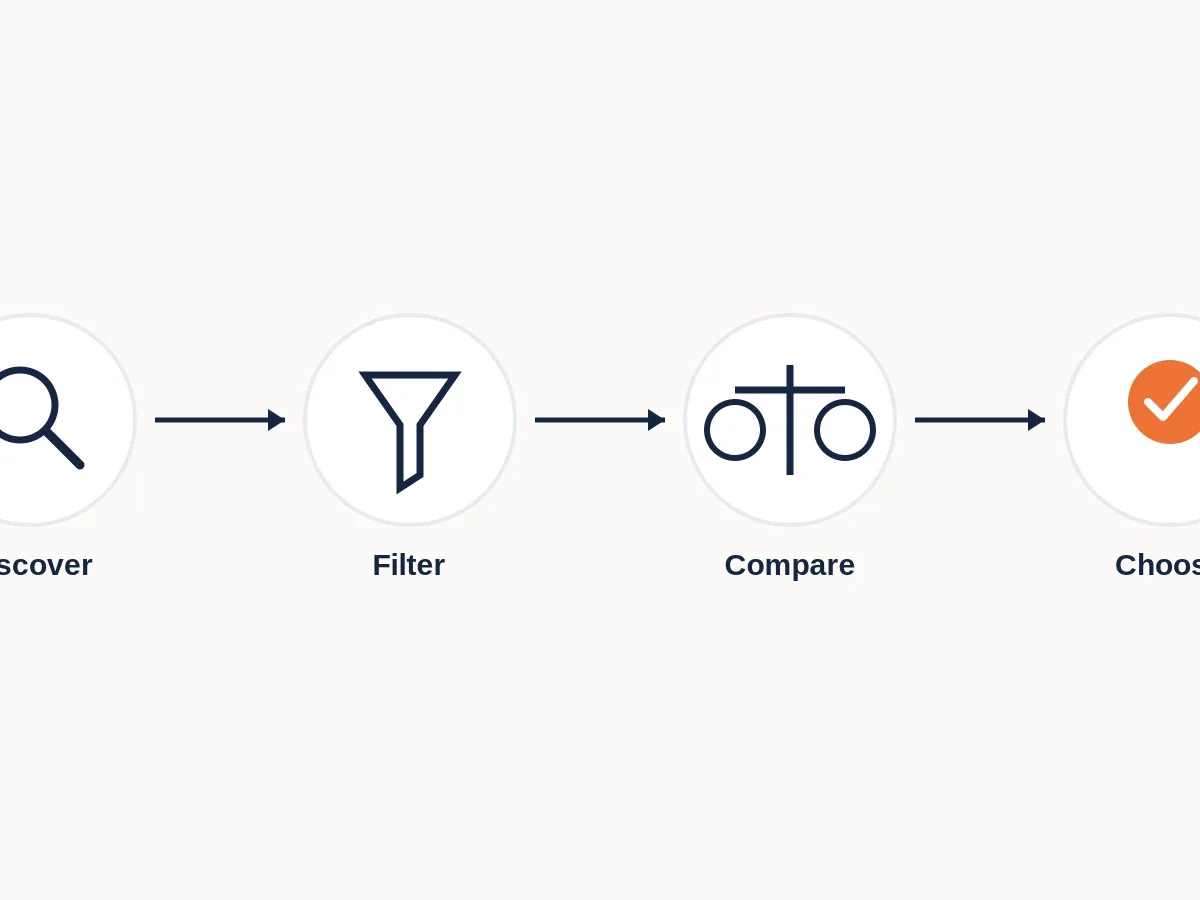
Who Are My Restaurant’s Real Competitors?
Your real competitor is not simply the restaurant next door or the one serving the same cuisine. It is any credible alternative that can win the same customer decision.

Four colleagues need lunch near the office, under RM30 each, with fast service and easy parking. A cafe, kopitiam, noodle shop and fast-casual chain may all compete for that one decision.
Competitor analysis should therefore start with the customer’s need and constraints, not your cuisine category.
Start with the job the customer is trying to solve
Operators often begin with category: “We are Japanese, so our competitors are Japanese restaurants.” Customers may begin with a different question: “Where can six people have dinner tonight for around RM60 each with easy parking?” That question can produce a much wider set of alternatives.
The more specific the occasion, the more useful the competitor set becomes. Quick weekday lunch, casual date night, family dinner, client meeting and birthday celebration may all produce different alternatives around the same restaurant.
You can make the exercise practical by writing the decision as a sentence: “Four colleagues need a quick lunch under RM30 each within ten minutes of the office.” Any restaurant that credibly satisfies that sentence is more relevant than a same-cuisine restaurant twenty minutes away that the group would never consider.
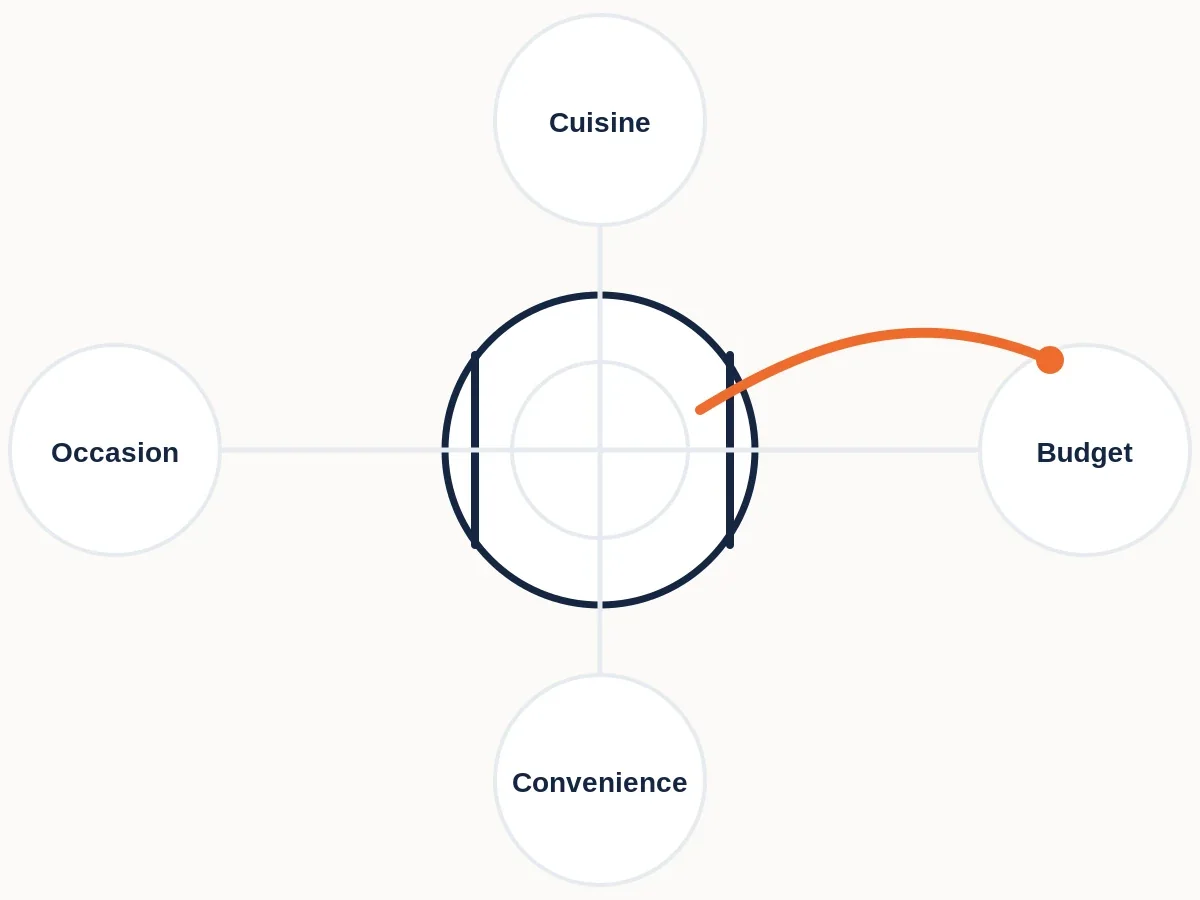
Think in rings, not one flat list of competitors.
This keeps competitor analysis useful. It helps you distinguish obvious nearby rivals from broader substitutes that can win the same decision.
- Same cuisine
- Same meal occasion
- Same catchment area
- Different cuisine
- Similar budget
- Suitable for the same group
- Closer option
- Better parking
- Easier ordering or access
Distance matters, but convenience is broader than distance
Two restaurants can be equally close and still feel very different to reach. Parking, traffic direction, mall access, queue expectations, reservation options, opening hours and familiarity can all change perceived convenience.
That is why a map radius alone is not enough. Use geography as one filter, then layer in the practical constraints that matter to the occasion.
Online discovery can widen or narrow that boundary as well. A restaurant that is slightly farther away may enter the choice set because it appears prominently on Maps, has easier parking or is already familiar from social media. A closer restaurant may be ignored because the entrance, queue or menu feels uncertain.
The customer’s criteria change when the reason for dining changes.
The Klang Valley restaurant-choice study of 539 customers found different top factors for quick meals, social occasions, business meals and celebrations. That means a restaurant’s relevant competitor set can also shift when the customer’s occasion changes.
These are rankings from a 2017 survey and should be treated as contextual evidence, not permanent rules. The robust strategic point is that occasion changes selection priorities.
Think in three competitor rings
Direct competitors offer a similar cuisine, concept or price point. Occasion competitors serve the same use case even if the cuisine differs. Convenience substitutes may win because they are faster, easier, more familiar or better located for the moment.
The third ring is often overlooked. A restaurant may not lose a dinner decision to another full-service concept at all. It may lose to a mall food option, takeaway, delivery or a familiar chain because the customer prioritised certainty and convenience that day.
Do not assume every ring deserves equal attention. Direct competitors may matter most for price benchmarking, while occasion competitors may be more important for understanding lost demand. Convenience substitutes can explain why a restaurant loses frequent low-consideration meals even when its food is well reviewed.
A competitor map becomes useful when it explains a specific customer decision. A giant list of nearby restaurants usually does not.
How to shortlist competitors without making the list endless
- Choose one dining occasion at a time.
- Define the realistic budget and travel boundary.
- List same-category competitors first.
- Add substitutes that solve the same occasion differently.
- Remove options the target customer would not realistically consider.
- Compare the remaining restaurants on decision-facing signals rather than copying their tactics.
Sources and context
Chua et al. (2020), Customer Restaurant Choice: An Empirical Analysis of Restaurant Types and Eating-Out Occasions. These sources support the general explanation above. They do not diagnose any specific restaurant, and study findings should be interpreted within their sample, place and time period.
See the alternatives surrounding your restaurant.
ORBIT analyses the competitive context around your specific restaurant instead of relying on a generic list of nearby businesses.