Why Are Customers Choosing My Competitors Instead?
Customers do not always choose between restaurants that look similar to operators. They choose between the alternatives that can solve the same dining decision.

Picture a customer deciding where to have dinner tonight. They may compare your restaurant with a different cuisine, a familiar chain, a cheaper option or somewhere with easier parking. To the customer, all of them can be competitors.
The useful question is not “who looks like us?” but “who can solve the same dining decision better?”

Your real competitor is defined by the decision
A cafe can compete with another cafe, but it can also compete with a bakery, mamak, casual chain or convenience-led meal if the customer’s real need is “somewhere easy to meet for an hour”. A premium restaurant can compete with a hotel dining room, private room concept or completely different cuisine when the occasion is a celebration.
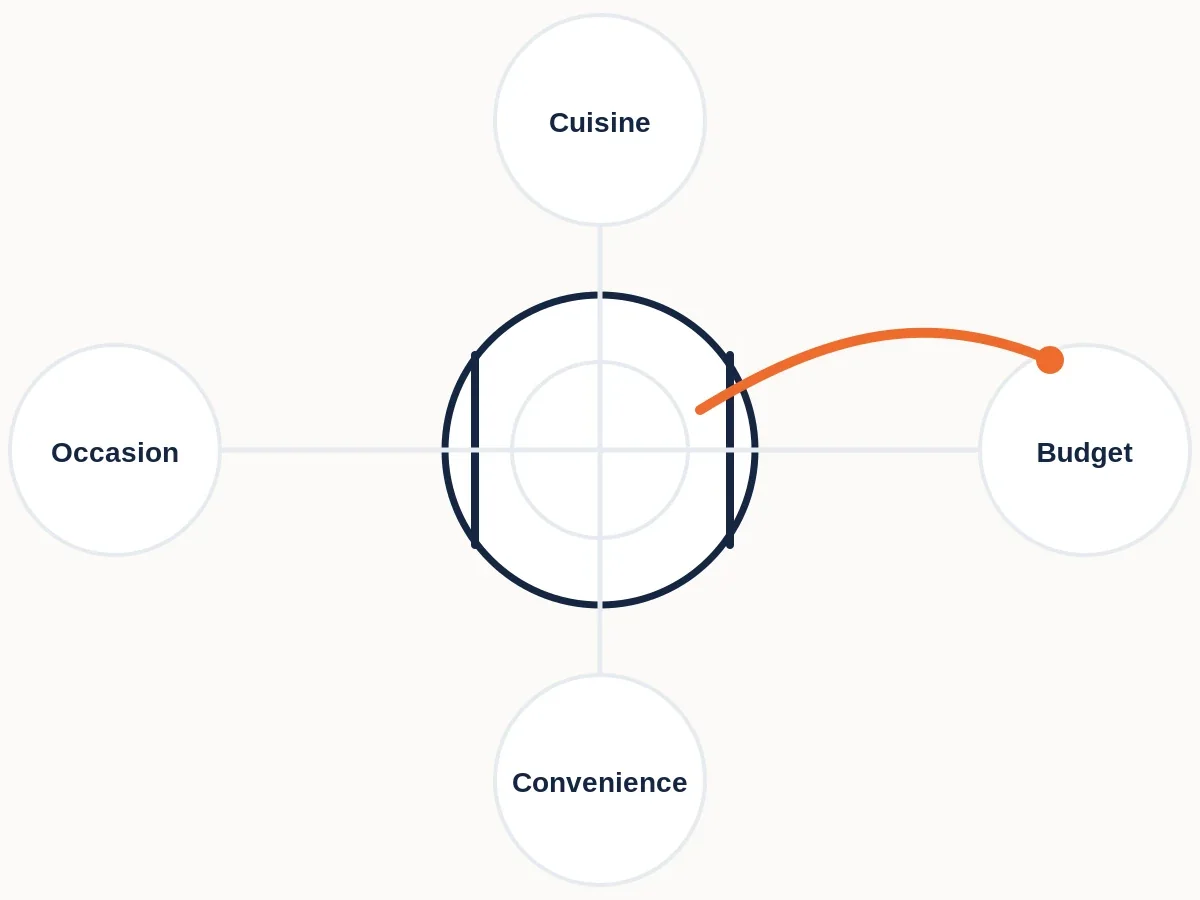
This is why category-only competitor lists are often too narrow. Operators see cuisine and concept. Customers may be solving for occasion, travel time, group comfort, perceived risk, price, familiarity or convenience.
Think about a customer deciding where to take visiting relatives. The shortlist might include Chinese seafood, a hotel buffet, a popular local restaurant and a mall concept because the real need is “easy for a mixed-age group, comfortable, trusted and convenient”. Cuisine alone does not define that battle.
Your real competitor is the alternative that can win the same dining decision.
Restaurants compete on more than cuisine. A customer can reject you for an alternative that is better suited to the same occasion, budget or convenience need.
The same customer can have a different competitor set tomorrow
A person choosing lunch near the office may prioritise speed and price. The same person choosing a birthday dinner may care more about reputation, group suitability and confidence that everyone will enjoy the experience. The restaurant has not changed, but the decision context has.
That means there is no single permanent list of competitors that explains every customer decision. A useful competitor set should be connected to the dining occasions and customer needs you actually want to win.
This is also why competitor analysis should be repeated when the restaurant changes its offer or target occasion. Adding a lunch set, private room, late-night menu or family bundle can move the restaurant into a different competitive set even if the core cuisine stays the same.
Restaurant choice factors changed materially by dining occasion.
In a 539-person Klang Valley study, price ranked highest for quick meals and social occasions. Reputation ranked highest for business necessity, while word of mouth ranked highest for celebrations. The finding supports an important competitive principle: the customer’s occasion changes what “better” means.
The survey was conducted in 2017, so the exact rankings should not be treated as a current universal rule. The useful evidence is that restaurant-selection priorities changed with context.
Do not copy the competitor before understanding why they win
When another restaurant looks busier, the temptation is to copy the visible move: their discount, menu item, social content or design. But the visible difference may not be the reason customers choose them.
They may be easier to access, better known for a particular occasion, clearer on price, faster for groups, stronger on word of mouth or more familiar to the local market. Copying the promotion when the advantage is convenience will not close the gap.
Visible tactics are especially easy to misread. A competitor may run a 20% promotion because it already has strong weekday demand and wants to fill a specific off-peak period. Copying the same offer without the same economics or demand pattern can reduce margin without reproducing the result.
A competitor list based only on cuisine or distance can miss the alternatives that customers are actually comparing.
How to build a more realistic competitor set
Start with the customer occasion, then expand outward from there.
- Name the occasion: quick lunch, family dinner, business meal, celebration, late-night meal, cafe meeting or another specific need.
- Set the practical boundaries: realistic travel time, budget, group size and operating hours.
- List substitutes, not only same-cuisine restaurants: include any option that could credibly win that occasion.
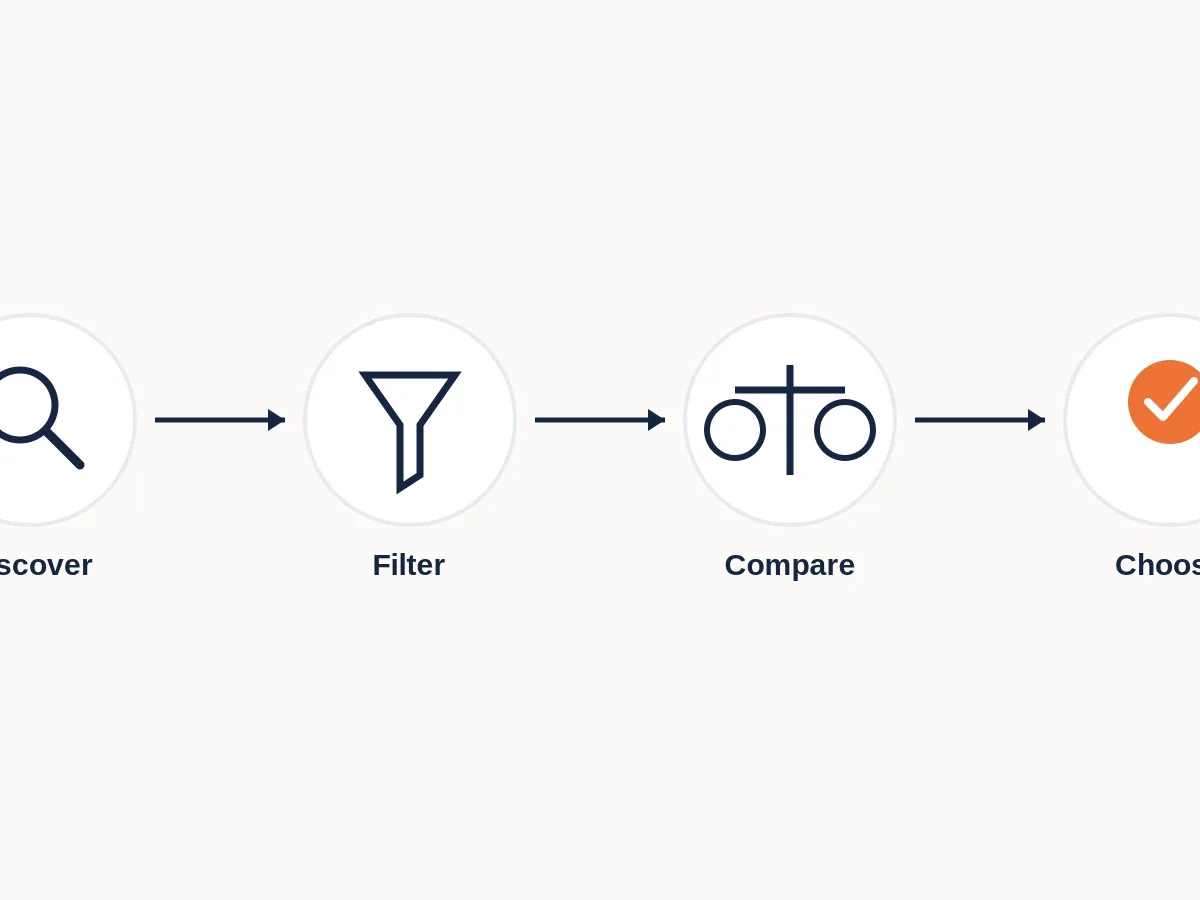
- Compare the decision-facing signals: menu, price, reviews, location, parking, familiarity, popularity, promotions and clarity of the offer.
- Look for repeated advantages: one difference may be noise; a consistent pattern across relevant alternatives deserves attention.
Sources and context
Chua et al. (2020), Customer Restaurant Choice: An Empirical Analysis of Restaurant Types and Eating-Out Occasions. These sources support the general explanation above. They do not diagnose any specific restaurant, and study findings should be interpreted within their sample, place and time period.
See the competition around your actual restaurant.
ORBIT examines the market surrounding your restaurant to identify relevant alternatives and the customer-choice signals that may be shaping the decision.