How Much Should a Restaurant Spend on Marketing in Malaysia?
There is no single percentage that fits every restaurant. A useful budget starts with the problem you are trying to solve, the customer behaviour you want to change and the evidence that marketing can actually move it.

Before you spend another ringgit on ads, social media or influencers, find out why your sales aren’t growing.
If too few relevant customers know you exist, more reach may help. If customers already discover your restaurant and still choose somewhere else, spending more can simply send more people into the same problem.
There is no single restaurant marketing budget for Malaysia
You will find plenty of percentage-of-revenue rules online. They can be a rough budgeting reference, but they are not a Malaysian standard and they do not tell you whether marketing is the reason your restaurant is underperforming.
A new opening that nobody knows about has a different problem from an established restaurant that gets plenty of Google Maps views but weak visits. A restaurant filling weekday lunch has a different objective from one trying to increase repeat dinner traffic. The right budget therefore depends on the job the money is supposed to do.
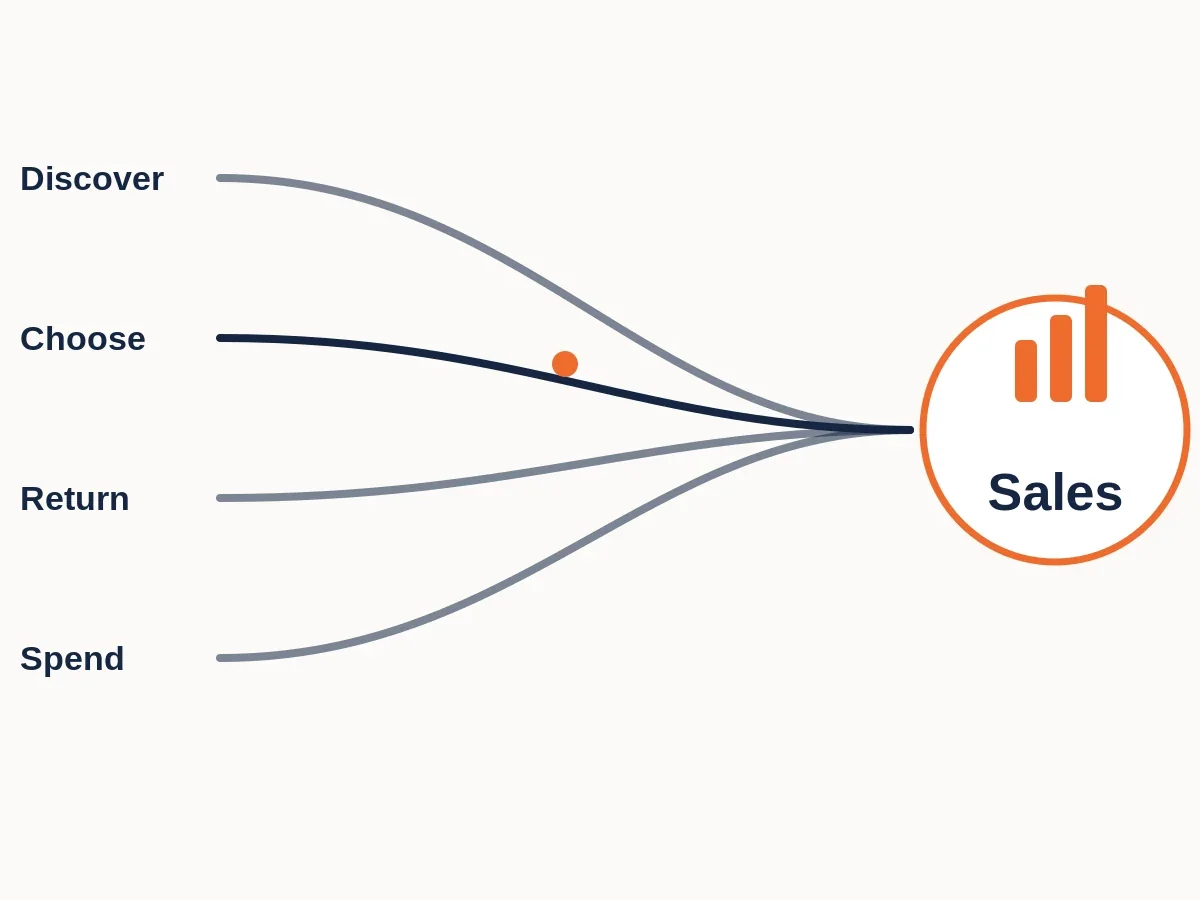
Start with the behaviour you need to change. Do you need more relevant people to discover the restaurant? More people who already know you to consider it? More bookings or walk-ins? More repeat visits? A budget makes more sense after that question is clear.
Malaysia is already spending heavily on digital attention.
The Malaysian Digital Association reported RM1.776 billion in agency-reported Digital Adex for 2025 and estimated total Malaysia Digital Adex at RM2.959 billion once direct advertisers and long-tail spend were included. Social accounted for 46.3% of reported Digital Adex, while Food & Beverage was the largest reported industry category at 19.8%.
These are national advertising-market figures, not restaurant-specific budget recommendations. They show the scale of money already competing for attention in Malaysia.
The first question is not “how much?” It is “what should the money change?”
Marketing spend only creates value if it changes a behaviour that matters. Paying for more impressions is useful when the restaurant has an awareness problem. It is much less useful when people already see the restaurant, check the menu, compare alternatives and decide not to come.
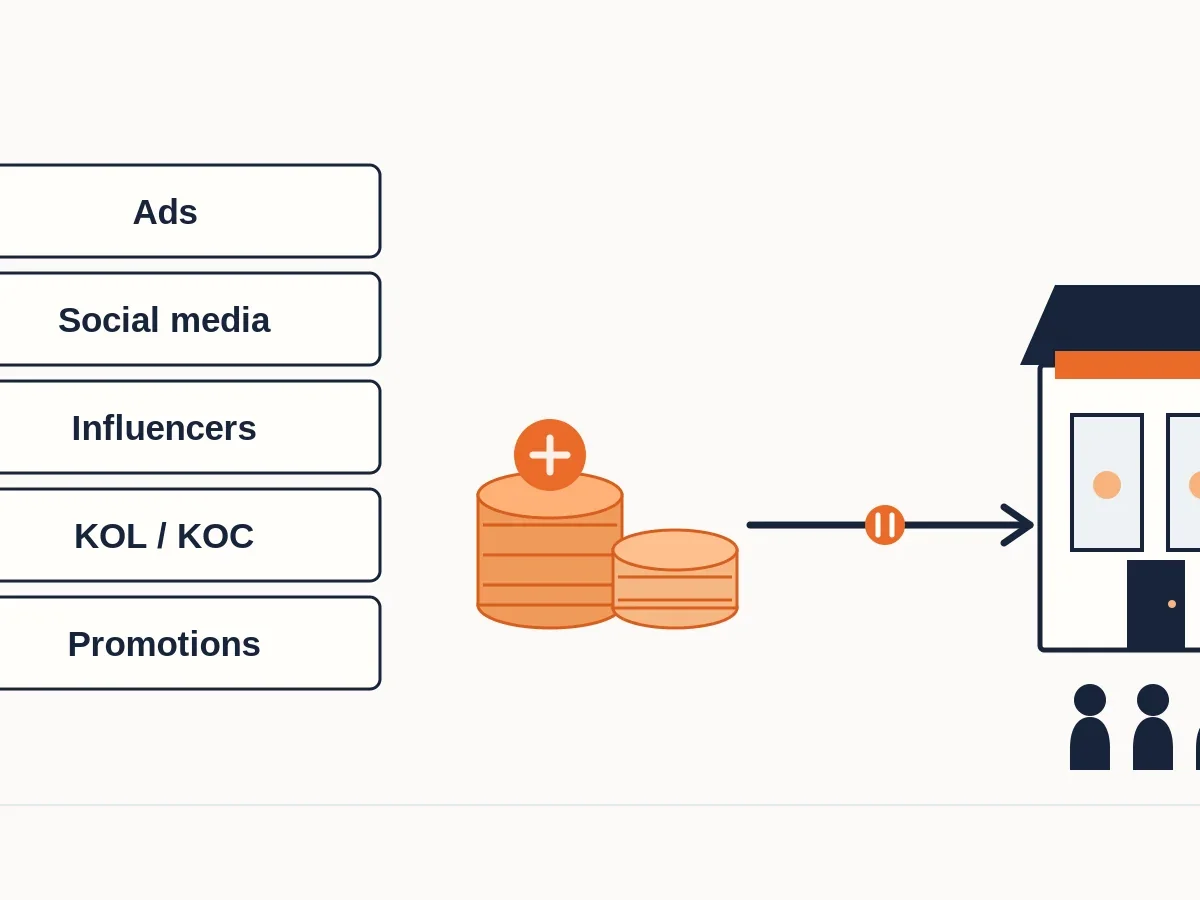
This is why reach, engagement and sales should not be treated as one thing. An influencer can introduce the restaurant to a new audience. Social media can create repeated exposure. Search ads can capture people with intent. Promotions can reduce the cost of trying the restaurant. Each tool does a different job, and none of them automatically explains what happens after the customer becomes interested.
If the real problem is weak value perception, difficult parking, an unclear menu, poor group fit, a stronger nearby default or weak repeat behaviour, increasing media spend may simply increase the number of people who encounter the same reason to say no.
Before you spend another ringgit, be able to explain what customer behaviour the next ringgit is meant to change.
When spending more can make sense
More marketing is easier to justify when evidence points to insufficient discovery. That may be the case when the restaurant is new, relevant local customers rarely encounter it, search visibility is weak, a strong offer is converting well among the people who do see it, or a proven campaign is generating profitable downstream actions and still has room to scale.
In those situations, the problem is genuinely closer to distribution. More of the right people need to know the restaurant exists, and the existing customer journey is healthy enough to absorb the additional attention.
Even then, define a stopping rule before increasing spend. Decide which downstream signal matters, how long you will test, and what result would justify scaling. The purpose is not to keep buying attention indefinitely. It is to learn whether the extra attention produces the behaviour you actually want.
When marketing may not be the first problem to fix
Be more cautious when visibility is already healthy but customer action remains weak. Examples include strong profile views with few directions or enquiries, good social reach with little menu consideration, positive reviews but a quiet dining room, repeated value complaints, weak repeat behaviour or customers consistently choosing a nearby alternative.
Those patterns do not prove that marketing is unnecessary. They suggest that marketing may be upstream of the real issue. In that situation, buying more reach before diagnosing the decision can make the numbers bigger without making the business healthier.
The same applies to influencers, KOLs and KOCs. They can be useful for reach, credibility, content or introducing a restaurant to a specific community. The question is still what you expect that exposure to change. If the customer gets interested and then rejects the restaurant for another reason, creator spend cannot be judged only by views, likes or comments.
Measuring paid advertising requires more than reach and engagement.
A 2025 Malaysian study based on 18 SMEs found that many businesses lacked structured ways to evaluate paid digital advertising. The researchers identified six components for evaluation: audience reach, engagement, conversion, return on investment, funnel diagnostics and integrated measurement systems.
The study covered SMEs across retail, services and manufacturing, not restaurants specifically. Its value here is the measurement principle: high-level attention metrics should be connected to conversion, ROI and the point of drop-off.
A practical test before the next RM1,000
- Name the problem: Is the restaurant short of discovery, consideration, action, repeat visits or spend per visit?
- Name the behaviour: What should the campaign make more people do: search, view the menu, request directions, book, visit, order or return?
- Choose the closest metric: Use a metric that sits near that behaviour, not a convenient vanity metric that only proves exposure.
- Check the leak: If attention is healthy, inspect what customers see next: pricing, menu fit, reviews, location, convenience and alternatives.
- Set a stop-or-scale rule: Decide in advance what evidence would make you increase, change or stop the spend.
So how much should your restaurant spend?
Enough to test a clearly defined problem without putting the business at unnecessary risk, then more only when the downstream evidence supports it. That answer is less convenient than a single percentage, but it is more useful.
If your restaurant genuinely has an awareness problem, under-spending can slow growth. If the problem sits later in the customer decision, increasing the budget can hide the diagnosis. The goal is not to spend as little as possible. It is to spend on the right problem.
For an independent restaurant, that means treating marketing as an experiment with a job, a measurable outcome and a decision rule. The budget follows the diagnosis, not the other way around.
Sources and context
Malaysian Digital Association, Digital Adex FY 2025; Nordin, Che Hussin & Mohamad Zaid (2025), Key Components for Evaluating Paid Digital Advertising Performance for SMEs in Malaysia. National advertising expenditure does not provide a recommended budget for an individual restaurant. The SME study is not restaurant-specific. Both are used here to provide Malaysian context for how much money is competing for attention and how paid advertising should be evaluated.
Understand the problem before choosing the next spend.
ORBIT examines external market evidence around your restaurant to identify the decision factors that may deserve attention before you put more money into execution.