Does a Cheap Price Make Customers Forgive a Bad Restaurant Experience?
The real 2026 numbers on price, quality and repeat intent are more surprising than “cheap always wins”.

A RM12.90 meal can feel like a bargain. The same meal at RM29 might feel disappointing. Does changing the price also change how customers remember the experience?
We hear a simple theory whenever a busy café launches a huge discount: people do not really care about service or food quality. Make it cheap and they will come. Make it cheap again and they will return.
It is an attractive theory because it seems visible in the queues. But queues are not evidence that customers stopped caring about quality. The 2026 research paints a more complicated, more useful picture of what diners think they are paying for.
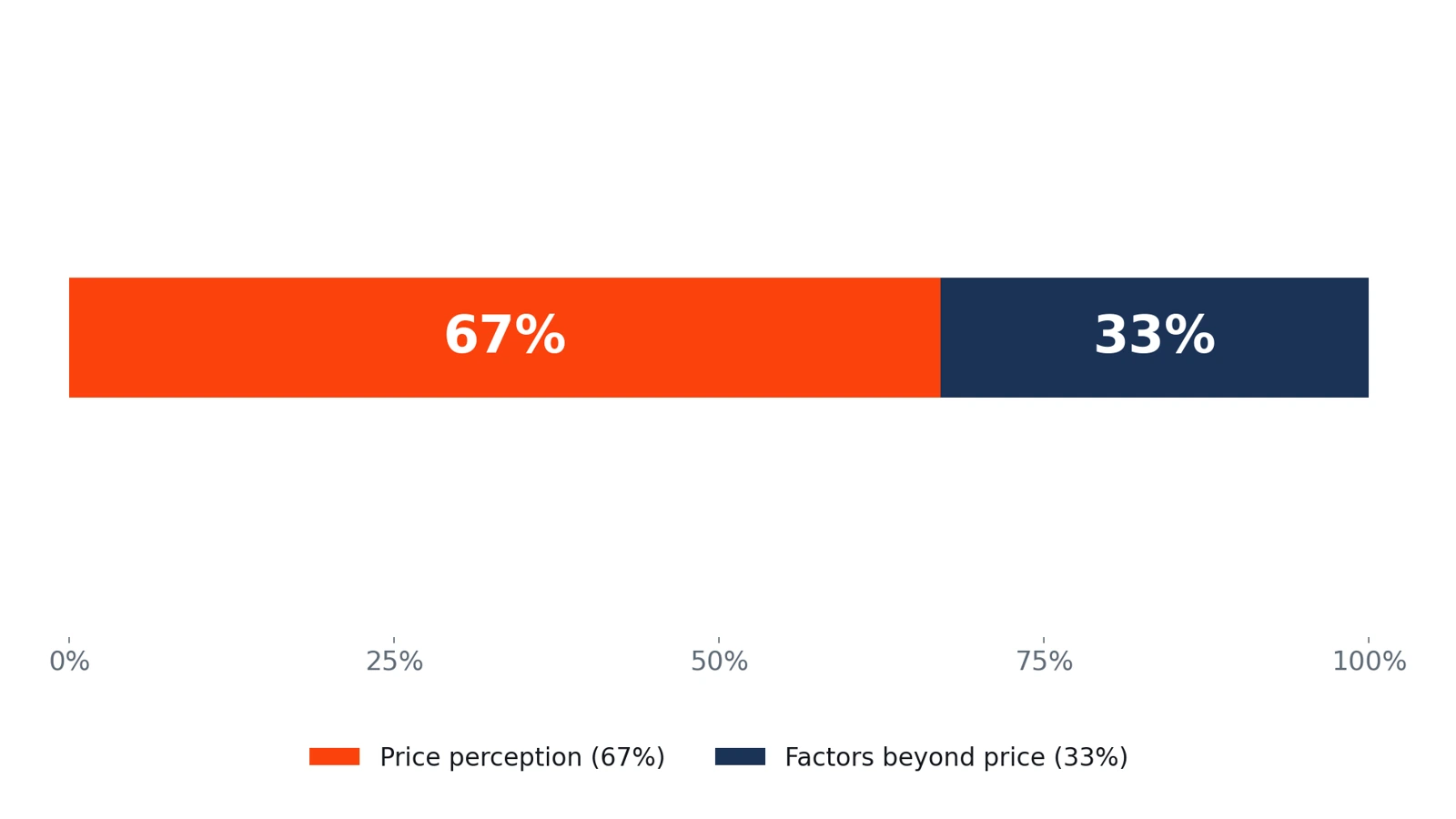
Short answer: Price is a major driver of restaurant value, but it does not make experience irrelevant. Deloitte’s 2026 US research attributed about 67% of perceived-value variation to price perception and 33% to other factors. McKinsey separately found customers seeking promotions while still valuing food quality. No credible dataset reviewed here establishes that cheap meals reliably overcome bad experiences for repeat visits.
Does cheaper food outweigh a disappointing experience?
Suppose a meal is ordinary, the wait is long and the service is forgettable. At RM35, a customer might say it was not worth it. At RM15, the same customer might be more forgiving. That sounds plausible. But plausible is not the same as observed, and it certainly does not mean that price can erase any experience.
In May 2026, Deloitte published an analysis of more than 416,000 consumer evaluation data points across 271 US restaurant brands, using three years of survey data through December 2025. Its model suggested that price perception explains about 67% of perceived value, with the remaining 33% linked to factors beyond price. Those factors include food and service quality, reliability and other experience drivers. Deloitte’s 2026 restaurant value research.
A tempting headline would be “Price matters twice as much as experience.” That would be too simplistic. The finding concerns an aggregate model of perceived value, not an individual diner's willingness to endure a dirty restaurant, a long delay or poor food. A low price may make a basic meal appealing; it does not make poor hygiene acceptable.
What 2026 diners actually said when a meal was not worth the price
McKinsey's January 2026 restaurant analysis combined consumer survey responses with transaction data. Its roughly 900-person US consumer survey, fielded in August 2025, found that many respondents planning to spend less preferred to trade down within a restaurant they already chose—by using promotions or ordering cheaper items—rather than automatically move to a different restaurant. McKinsey, January 2026.
But McKinsey also examined why diners felt that a restaurant visit was not worth the money. Of these disappointed diners, 57% ranked food quality among their top three reasons; the figure was 73% among Gen Z respondents. These figures are from different respondent groups, so they should not be read as a simple before-and-after comparison. They do show that price dissatisfaction is often bound up with the experience received.
People may still order a cheaper item from a restaurant they like. That's quite different from saying they will tolerate any food or service as long as the discount is steep enough. One behaviour shows loyalty combined with cost control; the other assumes that experience has stopped mattering.
The money finding is more interesting than the survey headline
Deloitte compared brands offering more perceived value than their price would predict with brands offering less. Across its underlying credit-card panel, the stronger-value group collectively recorded 7.3% faster revenue growth than the weaker-value group over the studied period. Deloitte also found stronger future purchase intent for those higher-value brands. Research and methodology.
That is a meaningful commercial association. It is not proof that improving one service score causes 7.3% more sales, nor that the effect applies unchanged in Malaysia. Bigger brands can differ in menu mix, site location, income demographics and marketing budgets. Yet the result makes the “only price matters” thesis hard to defend.
| Evidence | What it supports | What it does not prove |
|---|---|---|
| Deloitte: 67% / 33% | Price is a major factor in perceived restaurant value | Customers ignore staff, food or operational failures |
| Deloitte: 7.3% faster growth | Higher-value brands were commercially stronger in the observed panel | Experience caused exactly 7.3% incremental revenue |
| McKinsey: promotions within preferred brand | People can seek lower prices without changing restaurant | They will revisit after any bad experience |
| McKinsey: food quality disappointment | Quality still shapes whether a meal feels worth paying for | A discount alone fixes complaints |
Even two discounts with the same appeal can leave different memories
A January 2026 study in the International Journal of Hospitality Management examined 4,003 restaurant reviews alongside transaction data from an online group-buying platform. It compared promotional set menus with cash coupons. In the observed setting, set-menu promotions were associated with less positive review sentiment than cash coupons, with the pattern varying according to consumer characteristics and voucher prices. Read the 2026 paper.
This is not a test of a specific Malaysian restaurant, and the study does not mean that all set menus are bad. But it adds an important point to the price debate: customers react not just to how much they saved, but also to what the offer allowed them to choose and the experience they got. The shape of the promotion itself can influence the review left afterward.
That is an interesting reason to check actual customer feedback before assuming that a 50% sticker will overpower disappointment with a restrictive redemption process or an unsatisfactory meal.
Does this translate to Malaysia?
Malaysia has its own dining mix, incomes, delivery habits and value expectations. We should not pretend a US survey is a Malaysian causal estimate. Still, Malaysia-specific market reporting adds context: Euromonitor's March 2026 review of full-service restaurants in Malaysia describes value-led chains using member rewards and sharply priced meals to attract price-sensitive customers. This supports the relevance of the price question locally, but it does not measure the price a guest places on bad service.
Consider two similar cafés near an office district. The first wins on a RM9.90 offer but routinely makes people wait 40 minutes. The second sells a RM14 drink reliably in 10 minutes. The better choice depends on the customer, time of day and occasion. For a worker with a 30-minute break, the second café may be better value despite charging more. Those figures are illustrative; no survey in this article measured those two cafés.
This is why ORBIT's restaurant intelligence approach should examine both what nearby competitors are charging and what customers keep mentioning in reviews. Price and experience are parts of the same decision, not rival topics.
What about the time customers sacrifice for a promotion?
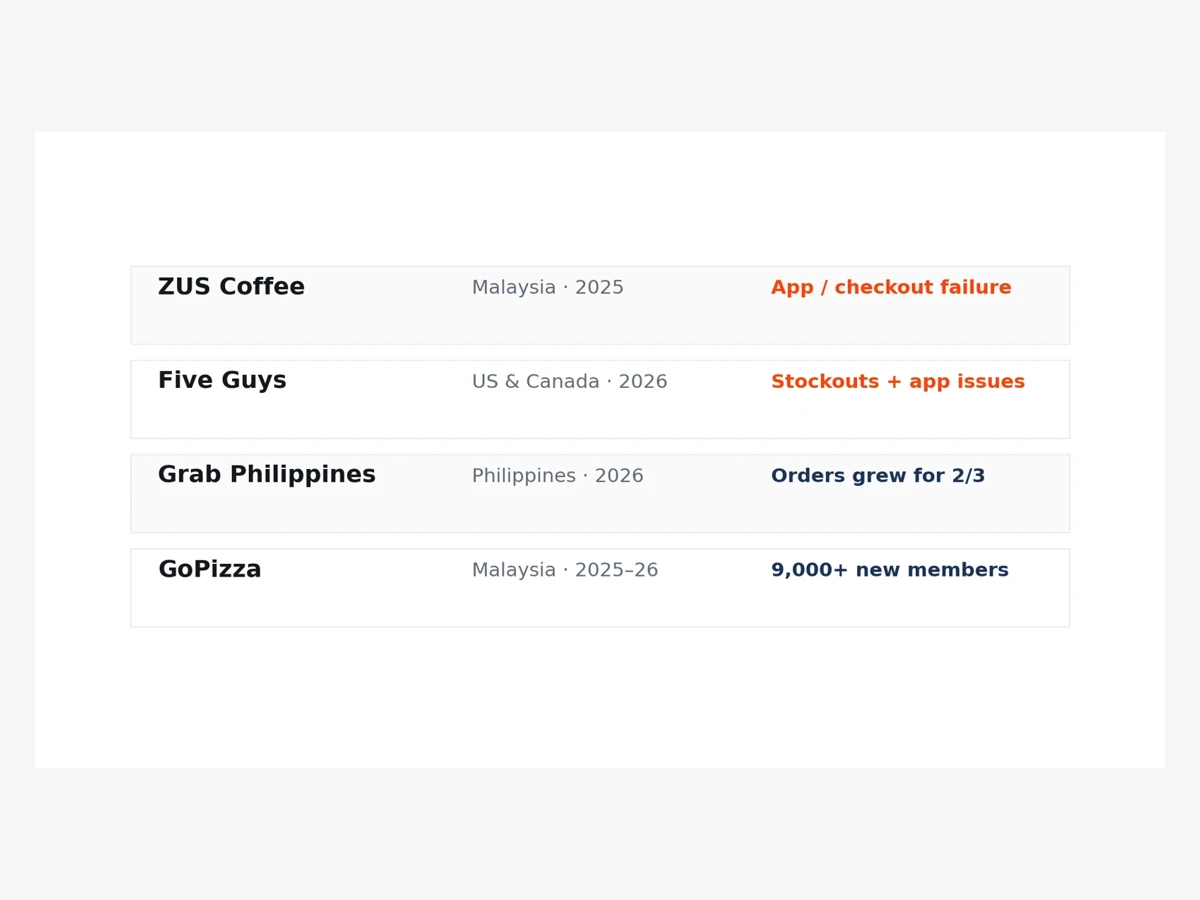
A discount has a hidden denominator: the time and effort required to claim it. Opening an app repeatedly, travelling to a store, waiting in a queue or correcting a payment problem can make a bargain feel worse. Five Guys and ZUS are good real-world illustrations of fulfilment friction during discounted campaigns, although neither case disclosed a measured customer time cost.
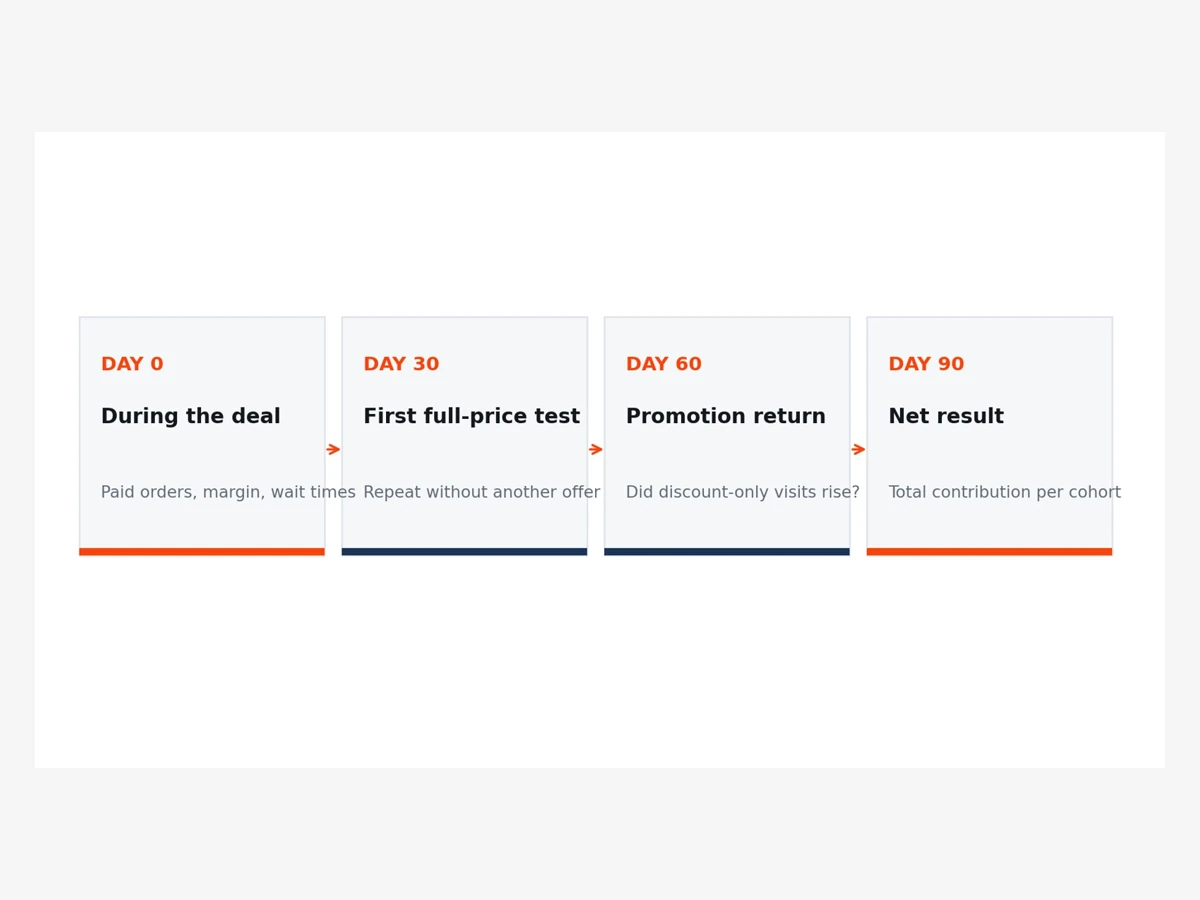
For a restaurant-owner experiment, record the all-in experience: amount paid, travel distance, ordering success, quoted waiting time, actual handover time, quality complaints and full-price repeat visits. A promotion that attracts bargain seekers but leaves them frustrated may work as a one-time event while doing little for repeat demand.
There is no defensible universal threshold at which 10 more minutes of waiting cancels a RM5 discount. That trade-off changes with who the customer is and why they are visiting. If you want a numerical answer, it has to come from your own observed repeat-visit data or from a directly applicable experiment.
Questions about price, service and repeat customers
Will customers return if the food is cheap but the service is bad?
Some may, but the 2025–2026 evidence reviewed here does not justify predicting how many. Price strongly shapes perceived value, while food and service quality remain important in future purchase intent.
Is a 50% discount better than improving service?
Not necessarily. The former immediately reduces revenue per discounted unit; the latter could improve perceived value and repeat intent. Which pays off depends on costs, demand and what customers complain about.
Do customers prefer deals over good food?
McKinsey found active deal-seeking, but also found food quality and portions were central to feeling a meal was worth its price. Both matter.
Is the Deloitte 67% figure a Malaysian result?
No. It is from Deloitte's US restaurant-brand research. The business insight may be useful, but it is not a Malaysian customer-preference measurement.
Method, source quality and limitations
This article uses published 2026 analysis rather than running a new consumer experiment. Most relevant figures come from US datasets and must be labelled as such. Deloitte's regression is a description of associations in sampled brands; McKinsey's survey records choices and stated motivations, not the causal effect of a discount on future restaurant retention.
- Deloitte, “How restaurants can win on value,” 18 May 2026 — 416,000+ evaluations, 271 brands, 67/33 model, 7.3% revenue-growth comparison.
- McKinsey, “What US consumers want from restaurants in 2026,” 8 January 2026 — trading down at preferred restaurants and food-quality dissatisfaction.
- International Journal of Hospitality Management, January 2026 — 4,003 online group-buying restaurant reviews; set menus and cash coupons were associated with different review sentiment.
- Euromonitor, March 2026 — Malaysia value-led F&B chains and discounts in the full-service segment.
- BCG, “What Diners Want and How Restaurants Can Win Them Back,” 2026 — independent industry survey context on value seeking.
A low price can make a meal feel better value. It cannot replace the meal.
When customers return for a discounted meal, the owner needs to know which reason brought them back. Was it the restaurant, the convenient location, the food, or the next voucher? Those answers are different business assets.
The question leads naturally to our next investigation: do repeated discounts create loyal customers or merely repeated redemptions?
Know what changed before planning your next promotion.
Explore what customers say, what competitors are doing and what is happening around your restaurant before deciding where to spend.