Do Restaurant Promotions Actually Work? 5 Real Success Cases from 2025–2026
What restaurant promotions actually improved: orders, sales, new customers and loyalty registrations across Malaysia and Southeast Asia.

A promotion brings people in. That is the easy part to notice.
A restaurant runs a first-purchase deal and collects thousands of sign-ups. A delivery platform funds a discount and orders jump. Both campaigns can succeed, but they have achieved different things.
In Malaysia, we often copy the offer that looks busiest. The useful question is harder: how many extra people actually paid, who funded the discount, and what happened after the campaign ended?
To investigate, we compared five restaurant promotion success stories from 2025–2026 in Malaysia, the Philippines and Thailand, using published merchant and platform results rather than generic marketing advice.
Short answer: Yes. Published 2025–2026 campaigns reported higher restaurant sales, more orders and thousands of loyalty sign-ups. Grab Thailand reported average participating-restaurant sales rising more than twofold; Malaysia’s GOPIZZA and TamJai Mixian programmes reported thousands of new members. But none of these five cases provides an independently verified incremental net-profit figure. Order growth, revenue and membership acquisition are different measures of success.
Which restaurant promotions succeeded in 2025–2026?
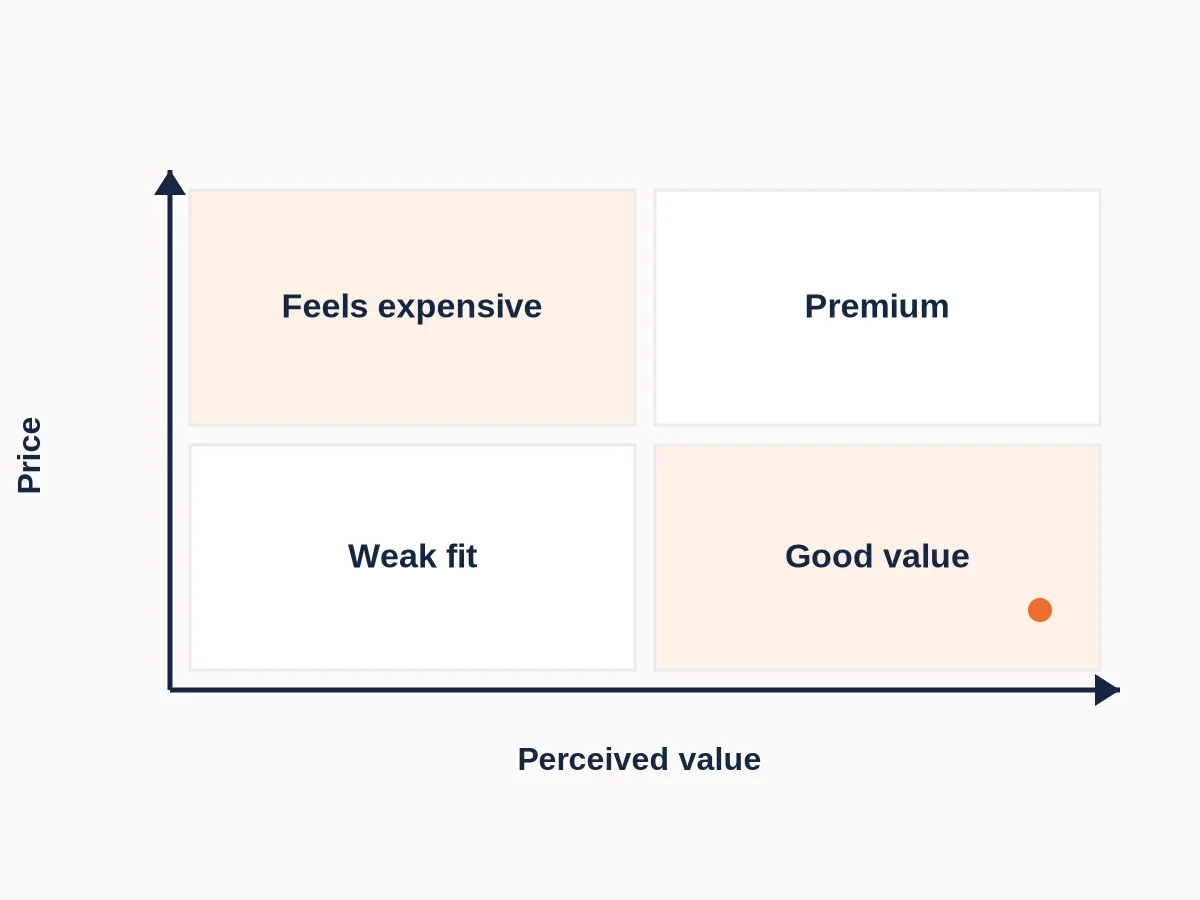
These are five publicly reported success cases from Malaysia, the Philippines and Thailand. Some increased purchasing activity; others collected loyalty registrations from potential future customers. The same campaign can look successful on orders and still leave an unanswered profit question. The table identifies the reported outcome before interpreting it.
| Brand and market | Activity | Published positive result | Success measure |
|---|---|---|---|
| GOPIZZA · Malaysia | Late 2025–Jan 2026 | 9,000+ loyalty members in 3.5 months | New registrations, not profit |
| TamJai Mixian · Malaysia | 2025 | 3,000+ new members in one month; sign-ups doubled after offer redesign | New registrations, not repeat sales |
| Grab demand boost · Philippines | 21 May–20 June 2026 | Two-thirds of selected merchants gained orders; average +30% among the growing merchants | Order growth, conditional subset |
| Grab 60/40 · Thailand | 15 June–30 Sept 2026 | 20m+ programme orders; average participating-restaurant sales grew more than twofold | Sales and programme activity |
| Pu Yen Ta Fo · Thailand | 2025 programme, reported June 2026 | More than THB1m in sales over two months; nearly 70% expansion in new-customer base | Sales and customer acquisition |
These results were published by the brands' loyalty provider or delivery-platform partner. They are documented successes, not controlled experiments, representative restaurant benchmarks or audited profit statements.
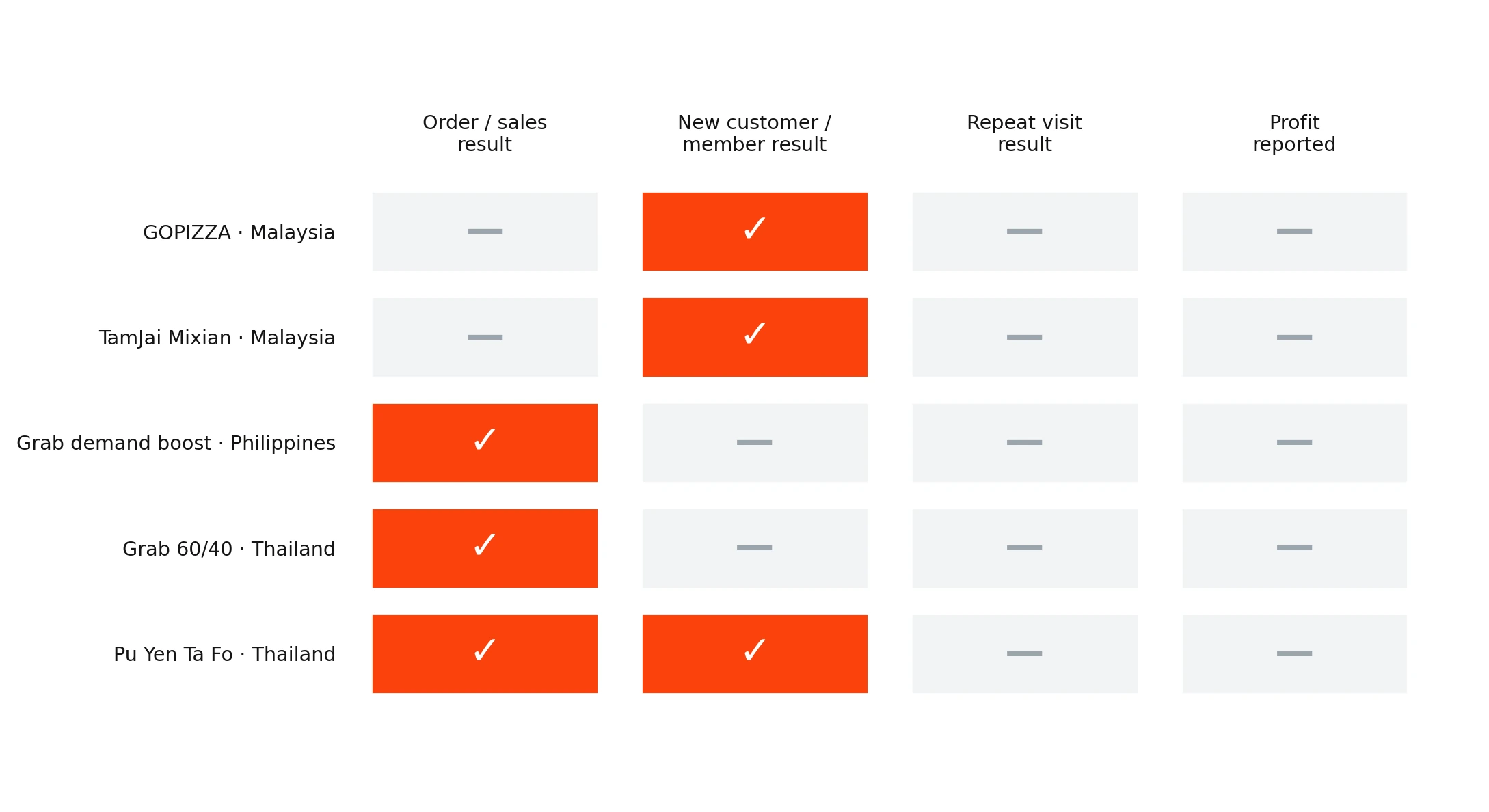
View the reported outcome categories
| Case | Reported outcome | Independently verified profit? |
|---|---|---|
| GOPIZZA Malaysia | 9,000+ membership sign-ups over 3.5 months | No |
| TamJai Mixian Malaysia | 3,000+ new members in one month | No |
| Grab Philippines | 2 of 3 merchants saw order increases; +30% average among those that grew | No |
| Grab Thailand | 20m+ programme orders; >2x average merchant sales | No |
| Pu Yen Ta Fo Thailand | THB 1m+ sales in two months; nearly 70% new-customer-base growth | No |
Malaysia / 2025–2026 · first-visit price + loyalty
GOPIZZA: Can a cheap first order turn into a customer relationship?
Reported result: 9,000+ members recruited during the first 3½ months, according to loyalty platform Eber.
GOPIZZA launched its personal-sized pizza format in Malaysia with a member-only first-pizza offer of RM5.99, against the reported normal price of RM9.90. Instead of making the customer fill out a long form, it used QR codes at the kiosk and tables. The brand later added spin-to-win rewards designed to create a reason for the next visit.
The result published by Eber was more than 9,000 members from its October-to-January launch period. That tells us the first-order offer and sign-up flow attracted interest. It does not tell us how many people made a second full-price purchase, how much the programme cost, or how many sales were incremental.
Lesson: If you discount a first purchase, make it possible to recognise the customer when they return. Then measure second visits, not just new members.
Source: Eber's GOPIZZA Malaysia case study. The source states October–January and was published in 2026; the October start aligns with the brand's 2025 Malaysia launch.
Malaysia / 2025 · launch gamification + first-bowl offer
TamJai Mixian: What happened when the welcome reward became clearer?
Reported result: 3,000+ new members in roughly one month following a switch to an RM5.90 first-bowl reward.
TamJai Mixian opened its first Malaysian outlet at Sunway Pyramid in July 2025. Ahead of opening, a three-day mini-game activation reportedly generated more than 800 loyalty sign-ups. The brand later replaced a more general incentive with a simple RM5.90 first-bowl offer.
Eber reported that monthly member sign-ups doubled between November and December, with more than 3,000 new members recorded after the reward change. This suggests that an easy-to-understand introductory price can remove a barrier to trying an unfamiliar restaurant. Other changes were happening at the same time, however, so the published material does not isolate the price incentive's effect.
Lesson: A promotion should answer a very specific hesitation. For a new brand, the question may be “Is trying this worth the risk?” An easy first-visit price is different from permanently lowering the whole menu.
Sources: Eber's TamJai case study and Tam Jai International's July 2025 opening release.
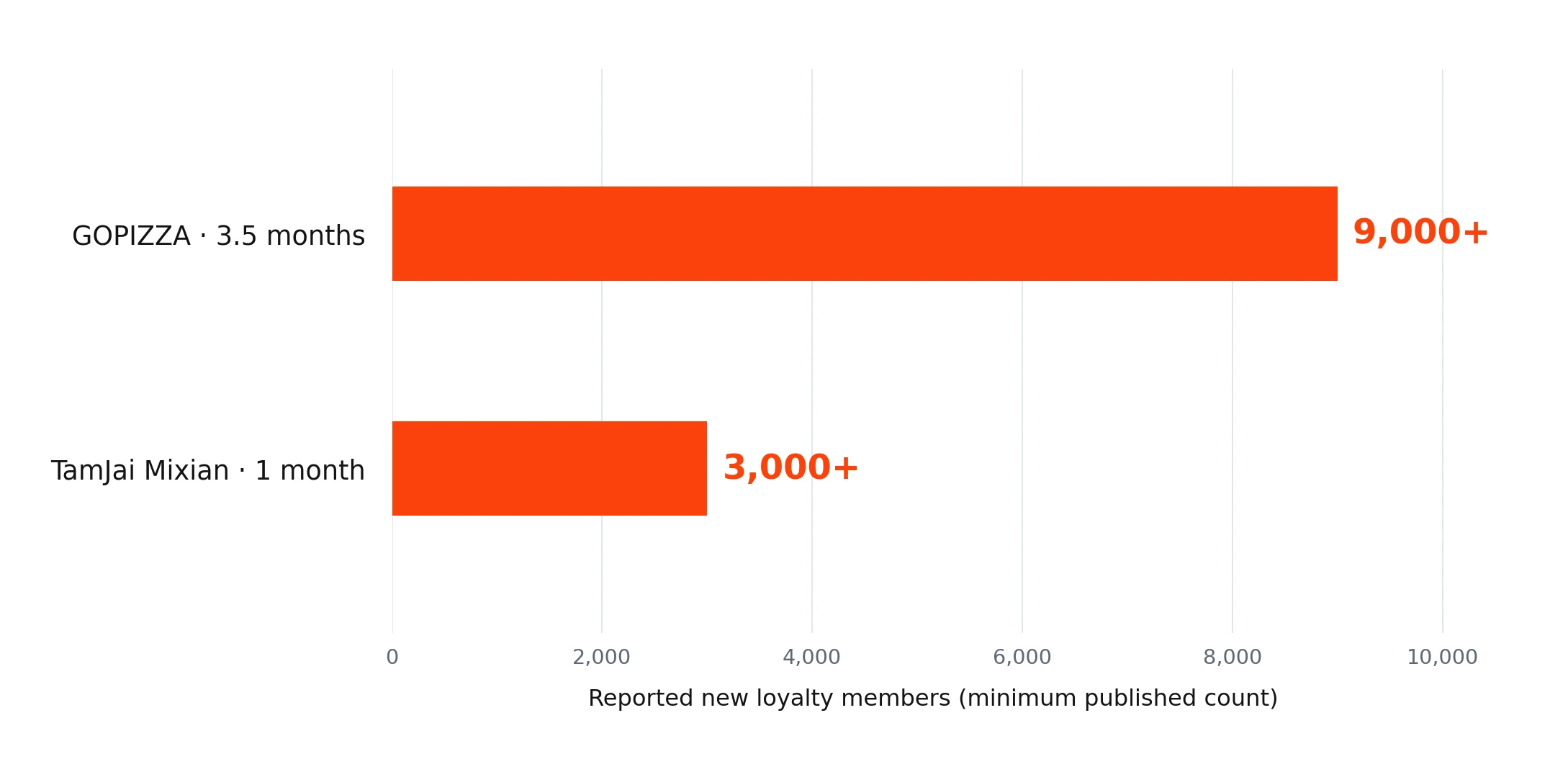
View reported loyalty sign-ups
| Programme | New memberships | Measurement period |
|---|---|---|
| GOPIZZA Malaysia | 9,000+ | 3.5 months |
| TamJai Mixian Malaysia | 3,000+ | 1 month |
Philippines / may–june 2026 · platform-funded discounts
Grab Philippines: What changes when the platform pays for the offer?
Reported result: 2 in 3 participating merchants recorded higher order volumes during the one-month campaign.
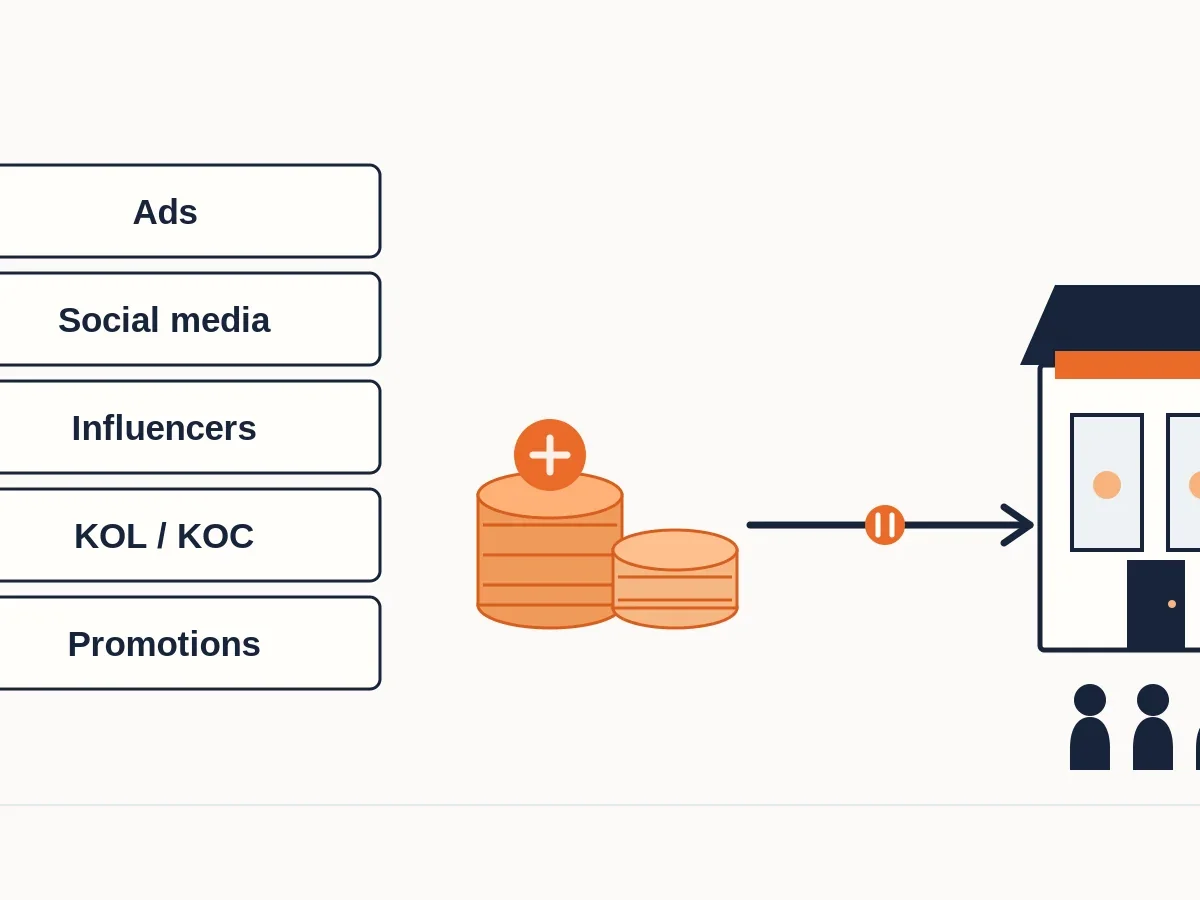
Between 21 May and 20 June 2026, Grab Philippines ran a fully funded demand-boost initiative for selected local food merchants. Rather than requiring participating restaurants to pay for the customer-facing incentives themselves, Grab absorbed that discount cost.
Grab reported that two-thirds of participating merchants saw more orders. Among merchants whose orders increased, the average increase was approximately 30%; the strongest cases gained substantially more. That conditional average is important: it is not a 30% average across every participant.
Because the platform funded the discount, the economics differ materially from a restaurant paying for a 20% discount out of its own margins. The published release does not provide transaction-level profitability, a matched control group, or long-term repeat-purchase rates.
Lesson: Before comparing discount campaigns, check who paid for the discount. An impressive order-growth figure from a fully funded promotion is not a valid benchmark for a self-funded promotion.
Source: Grab Philippines, 6 July 2026.
Thailand / june–september 2026 · platform campaign + ai tools
Grab Thailand: Do promotions and AI tools work better together?
Reported result: 20m+ orders through participating merchants during the 60/40 programme, according to Grab's October 2026 release.
Grab Thailand said its Thai Help Thai Plus (60/40) programme generated more than 20 million participating-restaurant orders between 15 June and 30 September 2026. The same 7 October announcement reported that average sales among participating restaurants rose by more than twofold. The release does not supply the per-merchant sales distribution or a controlled incremental-profit estimate.
The same announcement introduced a second, distinct result: more than 275,000 restaurants had tried its GrabMerchant AI Assistant. Grab also reported an average 20% order increase among restaurants regularly using its merchant AI assistant. That is an observational comparison of merchants, not a randomized test of AI, and it should not be presented as 20% extra profit.
The operational lesson is useful: merchant tools can surface popular dishes, order timing and sales patterns quickly. Yet active merchants may be more likely to adopt the AI assistant, so the observed difference does not prove that AI caused the growth.
Lesson: AI is useful when it helps owners decide which day, product, audience or offer deserves attention. It should not be used as a decorative claim that a campaign will automatically generate more sales.
Source: Grab Thailand's Thai-language results announcement, 7 October 2026 (translated and interpreted with caution).
Thailand / 2025 campaign reported june 2026 · delivery + menu choice
Pu Yen Ta Fo: What happened when a restaurant paired a subsidy programme with menu choice?
Reported result: THB1m+ sales across two months, with nearly 70% growth in its new-customer base, according to Grab Thailand.
In a June 2026 account looking back at Thailand's 2025 Kon La Krueng Plus programme, Grab profiled Pu Yen Ta Fo Rama 9, a noodle business that used the delivery channel while keeping food affordable. The restaurant offered over 15 topping choices and reported higher spending on add-ons during the programme.
The disclosed commercial result was more than one million baht in sales within two months and an increase of nearly 70% in the new-customer base. Unlike a sign-up count, those sales represent purchases. But the public release does not state incremental sales versus a control, discount funding per order, contribution margin, or net profit.
The case also describes operations: managing simultaneous orders, adjusting preparation time, and temporarily pausing orders when the kitchen reached capacity. That matters because promotional demand only becomes repeatable success if the restaurant can serve the additional customers well.
Lesson: An offer can be supported by operational changes and menu choices, not only a bigger discount. Measure extra paid orders, average basket and kitchen capacity alongside campaign revenue.
Source: Grab Thailand's English-language merchant case study, 5 June 2026. The featured performance relates to a 2025 campaign; the publication date is 2026.
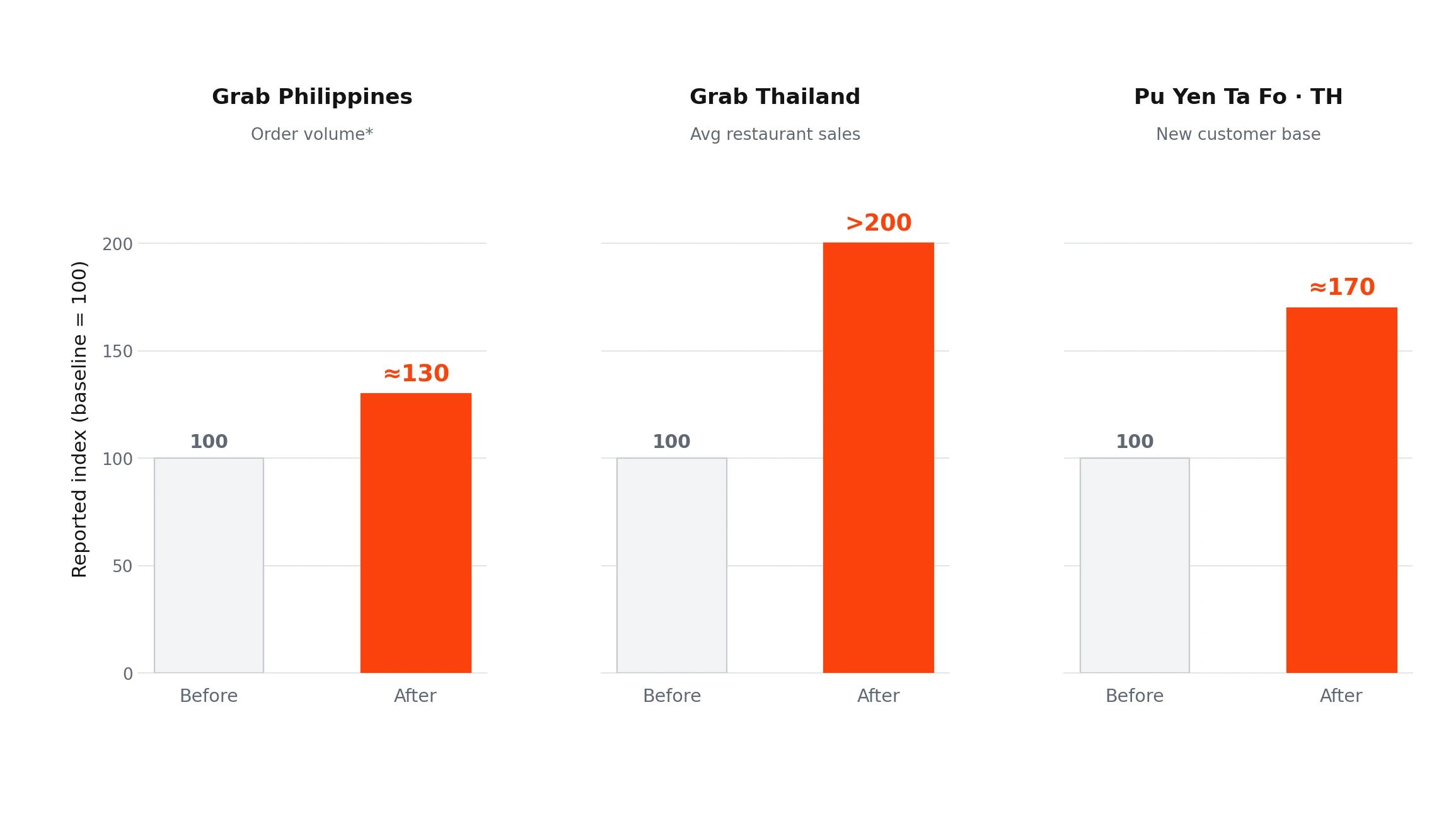
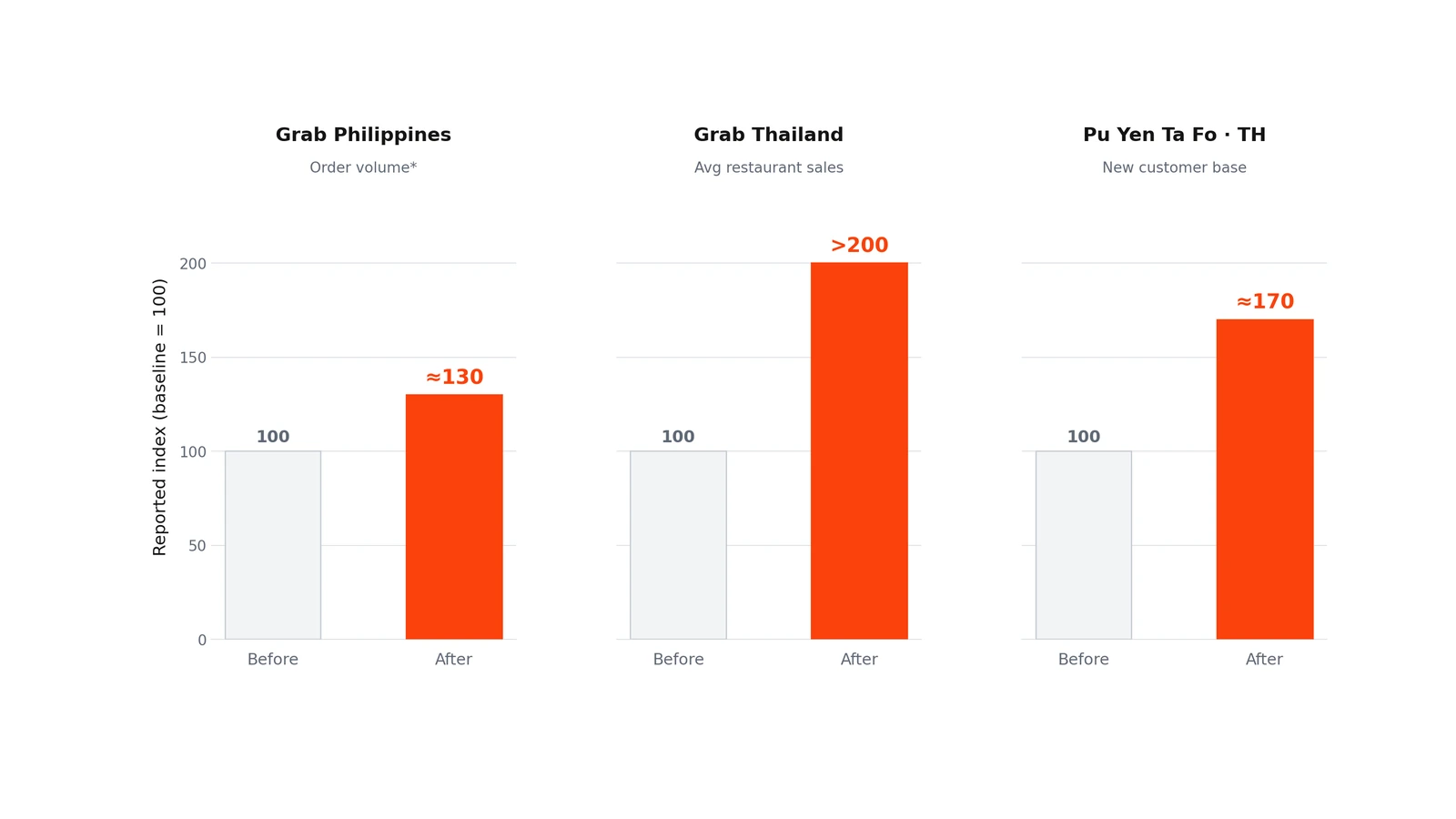
View the indexed comparison
| Programme | Reported ratio / lift | Metric | Notes |
|---|---|---|---|
| Grab Philippines | About +30% | Orders | Average only among merchants whose orders increased |
| Grab Thailand | More than 2x | Average sales | Participating merchants in 60/40 programme |
| Pu Yen Ta Fo Thailand | Nearly +70% | New-customer base | Reported expansion during 2025 campaign |
What changed for restaurant promotions in 2026?
In 2026, delivery apps and dine-out platforms can connect a promotion directly to a purchase. Restaurant owners need to consider where the customer first discovers the offer, who provides the discount, and whether the platform exposes enough data to evaluate it. The Philippine funded-discount campaign and Thai 60/40 programme illustrate how platforms can affect order volume; neither is proof that every restaurant should join every promotion.
AI-assisted merchant tools also entered the campaign workflow. Grab Thailand reported more than 275,000 merchants had tried its AI Assistant, which helps interpret transaction patterns and menu demand. Its 2026 sales comparison is interesting but observational; it does not establish a profit benefit or a causal AI effect.
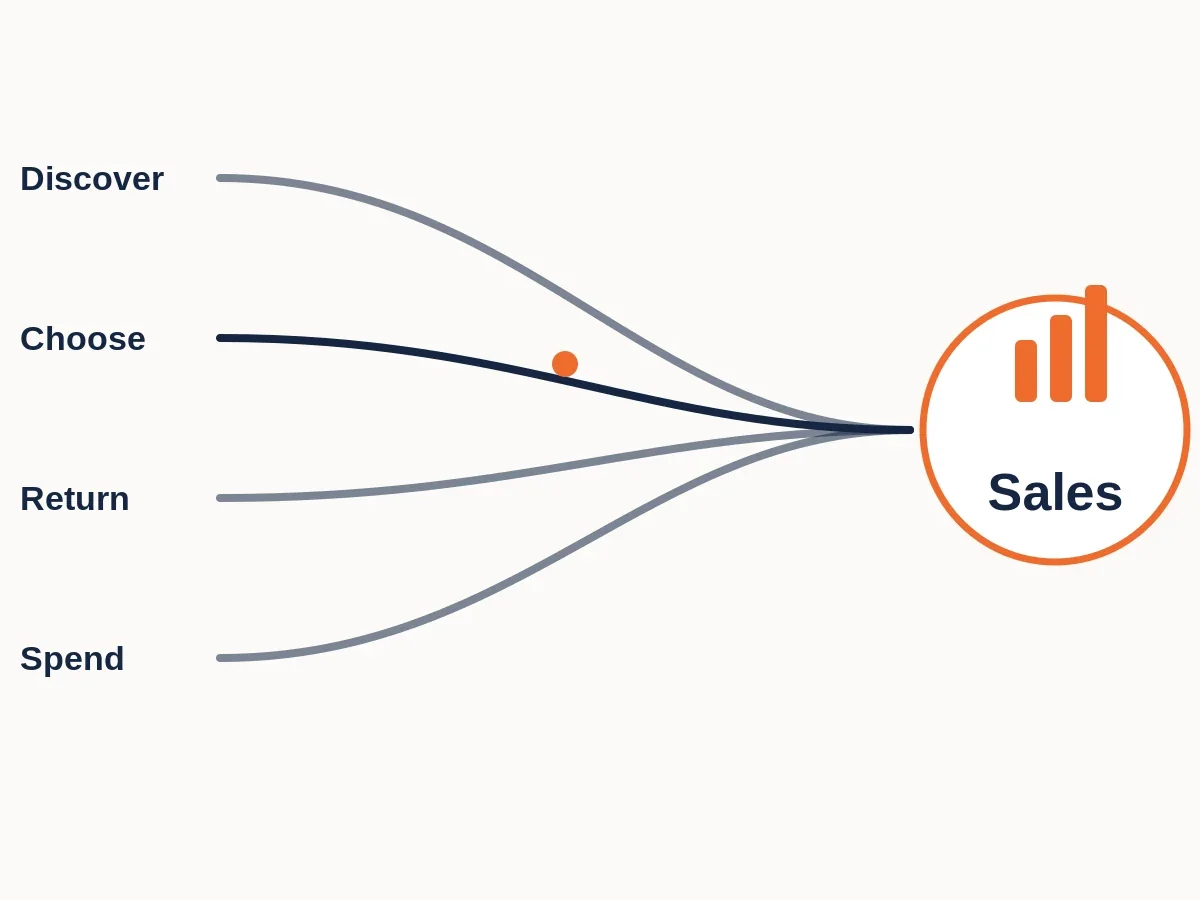
This makes the success question more specific: Was the campaign useful because of customer discovery, platform funding, a clear first-order price, more basket value, or repeat behaviour? A restaurant that knows which mechanism moved the result can make a better next decision than one that only copies the visible discount.
How much extra volume must a discount generate to avoid losing contribution?
More orders are only useful if the extra contribution covers the discount, extra variable costs and campaign spend. For a small restaurant, that often matters much more than campaign reach or redemption rate.
Consider a hypothetical item priced at RM30 with RM12 in variable costs. Before any offer, each sale contributes RM18 toward rent, fixed wages and profit. A self-funded 20% discount cuts the selling price to RM24, leaving only RM12 contribution per order, assuming the variable cost stays RM12.
Normal: RM30 − RM12 = RM18 contribution per order.
With 20% off: RM24 − RM12 = RM12 contribution per order.
Break-even volume: RM18 ÷ RM12 = 1.5× the usual number of orders.
This is an illustrative calculation, not reported results from any of the case studies. It excludes delivery fees, platform commissions, labour changes, vouchers funded by third parties and customer lifetime value.In this simple example, you would need 50% more orders merely to maintain the same total contribution, assuming your existing customers also receive the discount. A platform-funded offer has very different mathematics. So does a highly targeted first-visit reward that creates profitable repeat visits later.
Use this calculation before copying a competitor's promotion: contribution after discount = net selling price minus variable cost minus restaurant-funded promotional cost. Then ask how much extra volume the campaign needs to cover its fixed spending.
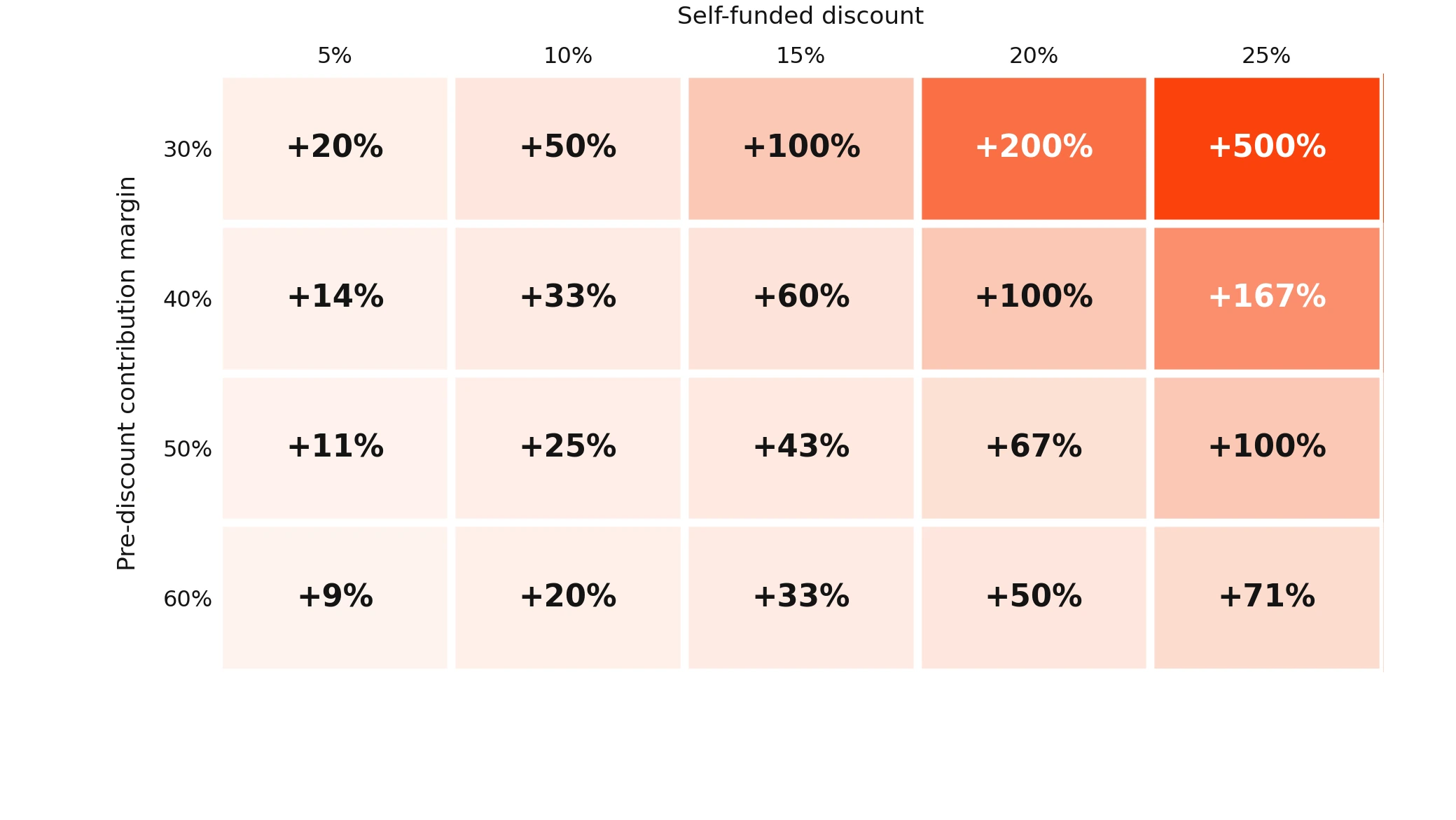
View break-even figures
| Discount | 40% contribution margin | 50% contribution margin | 60% contribution margin |
|---|---|---|---|
| 10% | 33% extra orders | 25% extra orders | 20% extra orders |
| 15% | 60% extra orders | 43% extra orders | 33% extra orders |
| 20% | 100% extra orders | 67% extra orders | 50% extra orders |
Questions Malaysian restaurant owners should ask before launching a promotion
How much did the successful 2026 campaigns increase restaurant sales or orders?
Grab Thailand reported more than 2x average sales among participating restaurants in its 60/40 programme. In the Philippines, two-thirds of the selected merchants gained orders and the merchants whose orders grew averaged roughly 30% growth. Those figures refer to different markets and groups; neither establishes the profit margin of a Malaysian restaurant.
What is the best restaurant promotion in Malaysia in 2026?
There is no proven single winner. A first-visit reward may help an unknown brand; a member-only offer may support return visits; a platform-funded discount may temporarily lift delivery volume. Choose according to the customer behaviour you need to change, then compare the cost per additional profitable customer, not the largest percentage discount.
Are GrabFood promotions worth joining?
They can be, particularly when the platform funds some or all of the incentive. Ask whether the reported growth includes existing buyers who would have ordered anyway, whether the platform commission changes, and how much contribution remains per order. Grab Philippines' 2026 funded campaign is encouraging evidence of order response, not a guarantee of profit for Malaysia.
Should I run a 20% discount if a nearby competitor does?
Not automatically. Check whether the competitor's offer targets the same customers, daypart and basket size. A discount can be expensive if customers were already planning to buy. Test a narrower mechanic — such as a specific slow-day bundle or first-order reward — against a baseline before cutting the whole menu.
Can AI really improve restaurant promotions in 2026?
AI can help reveal when orders rise, which items sell together, which reviews signal friction and when demand patterns shift. Grab Thailand reported higher growth among regular users of its merchant AI tool in 2026, but that observation does not prove the tool caused the gain. Test whether an AI-informed decision outperforms your current process.
Which results should I track?
Track incremental paid orders, net sales, average basket size, contribution margin after offer and platform fees, new paying customers, and repeat purchases after 30 and 60 days. Record exactly who funded the incentive. Keep website clicks, loyalty sign-ups and follower growth as supporting indicators, not substitutes for sales or profitability.
Research method and limitations
ORBIT selected five restaurant promotion stories with publicly disclosed positive outcomes from 2025–2026, prioritising Malaysia and Southeast Asia. We reviewed primary announcements from Grab and merchant interviews reported by loyalty-platform provider Eber. The Pu Yen Ta Fo outcome relates to a 2025 campaign disclosed in June 2026. The review is an editorial case comparison, not a controlled experiment or an independent audit of transaction records.
Cases were chosen because they disclosed an identifiable campaign mechanic and a numerical outcome. The selection therefore does not represent the average promotion or prove a high success probability. Company and vendor sources have commercial interests; metrics and definitions differ. We flag whether a number is order growth, sales, registrations or a mathematical illustration. No selected source discloses an independently verified incremental net-profit figure.
Figure method: ORBIT classifies the result categories disclosed by each public source. The indexed comparison assigns 100 to each case’s own baseline and applies only the published percentage or ratio; the different business measures are not directly comparable. The loyalty figure uses counts over different reporting periods. The discount chart is an illustrative contribution calculation, not a measurement from any of the five campaigns.
Primary source documents
- Eber: GOPIZZA Malaysia (9,000+ members, 3.5 months; case published in 2026)
- Eber: TamJai Mixian Malaysia (3,000+ monthly new members after reward redesign; published 2026)
- Grab Philippines, 6 July 2026: Platform-funded merchant campaign
- Grab Thailand, 7 October 2026 (Thai): 60/40 programme results and merchant AI usage
- Grab Thailand, 5 June 2026 (English): Pu Yen Ta Fo and 2025 campaign results
Reviewed 13 October 2026. Dates reflect the campaign where known; publication dates are stated separately when the report is retrospective. Results may be updated if additional audited merchant-level data is published.
A promotion worked. Would it work for your restaurant?
Use customer feedback, local competition and recent demand signals to decide what to test before spending.