When Social Attention Turns Into Search
The most useful transition may be when people stop being shown a restaurant and start looking for it.

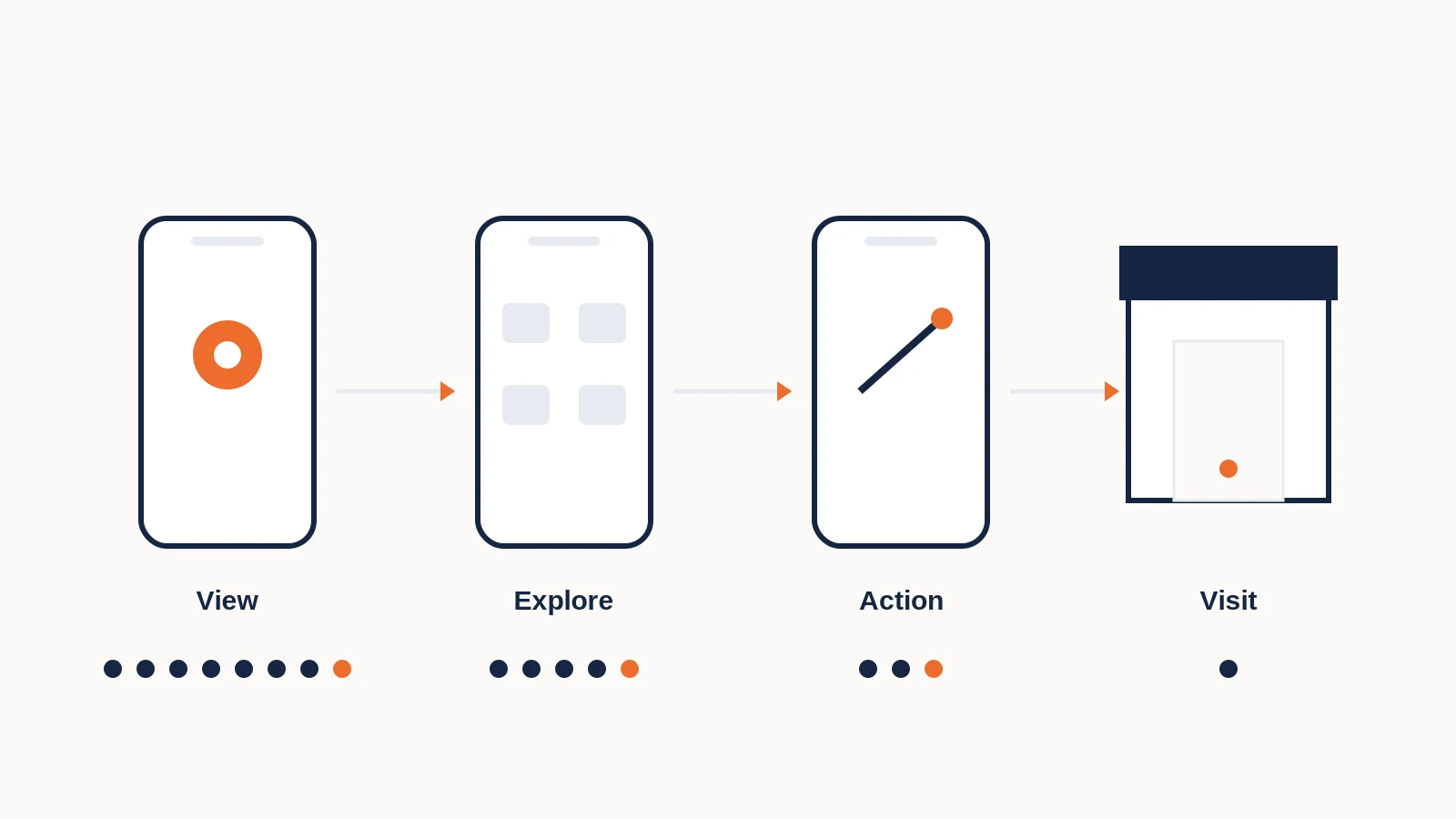
Search is one of the cleanest signs that attention has become active information seeking. A person who sees a food video is still passive. A person who types the restaurant name, price, halal status, queue time or location is trying to reduce uncertainty before acting. For restaurants, the transition from push exposure to pull behaviour deserves its own measurement.
Key takeaways
- Push and pull are differentBeing shown a restaurant is not the same as looking for it.
- Queries reveal frictionPrice, halal, parking and queue searches tell you what may block conversion.
- Search can concentrate demandInformation seeking can help one venue become the default answer in a category.
- Answer the search fastIf the restaurant cannot resolve the question, attention can leak to competitors.
The push-to-pull transition
Most viral attention begins as push. TikTok, Instagram, a community page, a friend or a media story places the food in front of somebody who did not ask for it.
Pull begins when the consumer decides the object is important enough to investigate. That can happen seconds later or weeks later.
- 1Exposure
The consumer sees the food.
- 2Curiosity
The consumer wants more information than the post provides.
- 3Search
They actively look for the restaurant, dish, price, halal status, location or reviews.
- 4Comparison
Search exposes alternatives and competing evidence.
- 5Action
The consumer chooses whether to visit, order, save or abandon.
That transition matters because the restaurant is no longer competing only inside the original post. It is now competing in search results, Maps, reviews and the consumer’s consideration set.
Why information seeking changes diffusion
A real-world product-diffusion experiment seeded 70,000 vouchers into a network of roughly 43 million people and reached more than 800,000 people. The researchers found that active information seeking from central sources produced winner-take-all dynamics that ordinary friend-to-friend diffusion alone did not.1
The direct context was not restaurants, so we should not transfer its numbers. The mechanism is what matters: once people start searching, central rankings and information sources can concentrate demand.
Social media can create the question. Search can decide which restaurant becomes the answer.
What search can tell a restaurant owner
Malaysian restaurant research shows that online reviews and crowd cues can affect purchase intention.2 Search is often where the consumer encounters those cues.
| Search behaviour | What it may indicate | Restaurant response |
|---|---|---|
| Restaurant name | Awareness / verification | Own the correct business information and brand result |
| Menu / price | Value evaluation | Publish current menu/pricing clearly |
| Halal / ingredients | Participation gate | Use precise, non-misleading status information |
| Parking / location | Convenience friction | Give practical access information |
| Queue / opening hours | Effort calculation | Keep hours and service updates current |
| Review / “worth it” | Trust and hype evaluation | Monitor what customers actually say, not only rating average |
| X vs Y | Active competitive comparison | Understand the attribute on which you are being compared |
The operator move: answer the questions virality creates
When attention rises, update these first
- Google Business Profile opening hours, phone, address, menu and photos.
- A simple page or social highlight with price, ordering process and availability.
- Clear halal/ingredient information where relevant; avoid vague claims.
- Queue or reservation expectations if waiting has become part of the conversation.
- A concise explanation of what the product actually is and why it is different.
- Review monitoring to identify recurring uncertainty or disappointment.
Search should also be interpreted alongside diffusion structure. A mega-creator can create both views and searches without creating long-run contagion.3 The important question is whether search remains elevated as the original post cools and whether new sources continue feeding the market.
Search is stronger than a view, but it still is not a visit
Search should not become the next vanity metric. A branded query can mean curiosity, scepticism, comparison or even controversy. The value comes from reading the query mix and observing what happens after search.
If “restaurant name” rises but Maps actions and review activity do not, the audience may be curious without intending to visit. If “price,” “halal,” “location” and “queue” rise together, the market may be actively resolving participation barriers.
The most useful interpretation combines search with offline and review evidence instead of treating one platform as the source of truth.
What the restaurant should publish during a breakout
A breakout creates repeated questions. Instead of answering them one by one in comments, turn them into durable information assets.
| Question people ask | Useful content asset |
|---|---|
| How much? | Current menu/pricing page or pinned menu |
| Where exactly? | Accurate Maps listing and access directions |
| Halal? | Precise certification/status/ingredient statement |
| How long is the queue? | Service update or reservation/walk-in guidance |
| What should I order? | Simple hero-product guide |
| Is it worth it? | Let customer reviews and clear product information answer honestly |
This is where SEO, AEO and virality meet: the restaurant does not need generic traffic. It needs to become the clearest answer to the questions attention has already created.
The search spike can send demand to competitors
Once a consumer leaves the original post and starts searching, the restaurant loses control of the information environment. Search results can show competitors, reviews, Maps ratings, price comparisons and “similar places.”
That means a viral post can unintentionally advertise the category more than the brand. If the consumer remembers “ayam gepuk PJ” but not the restaurant name, the winner may be whichever venue dominates the next search step.
For operators, this creates a simple rule: the more attention you generate, the more important it becomes that your name, menu, location and differentiator are easy to retrieve. Otherwise the campaign creates category demand that someone else can capture.
Research notes & sources3 sources
How this article was researched
This article applies information-seeking diffusion research to restaurant consideration. The search behaviours listed are practical signals, not a validated causal funnel for every food trend.
- Product diffusion through on-demand information-seeking behaviour
Large field experiment seeded 70,000 vouchers into a network of about 43 million people; active information seeking produced distinctive winner-take-all diffusion. - Online reviews and crowd cues in Malaysian restaurant choice
Malaysian restaurant study (N=200). Review ratings and perceived crowding positively affected purchase intention. - Goel et al. — The Structural Virality of Online Diffusion
Management Science, 2015. Analyses roughly one billion Twitter diffusion events and separates large broadcast from multi-generation diffusion.
What this research cannot proveLimitations
Google Trends, platform search and Maps data are incomplete and subject to sampling, ranking and privacy effects. A search spike can reflect news, controversy or seasonality rather than purchase intent, so search should be combined with other evidence.