Why Some Viral Food Posts Never Create Restaurant Demand
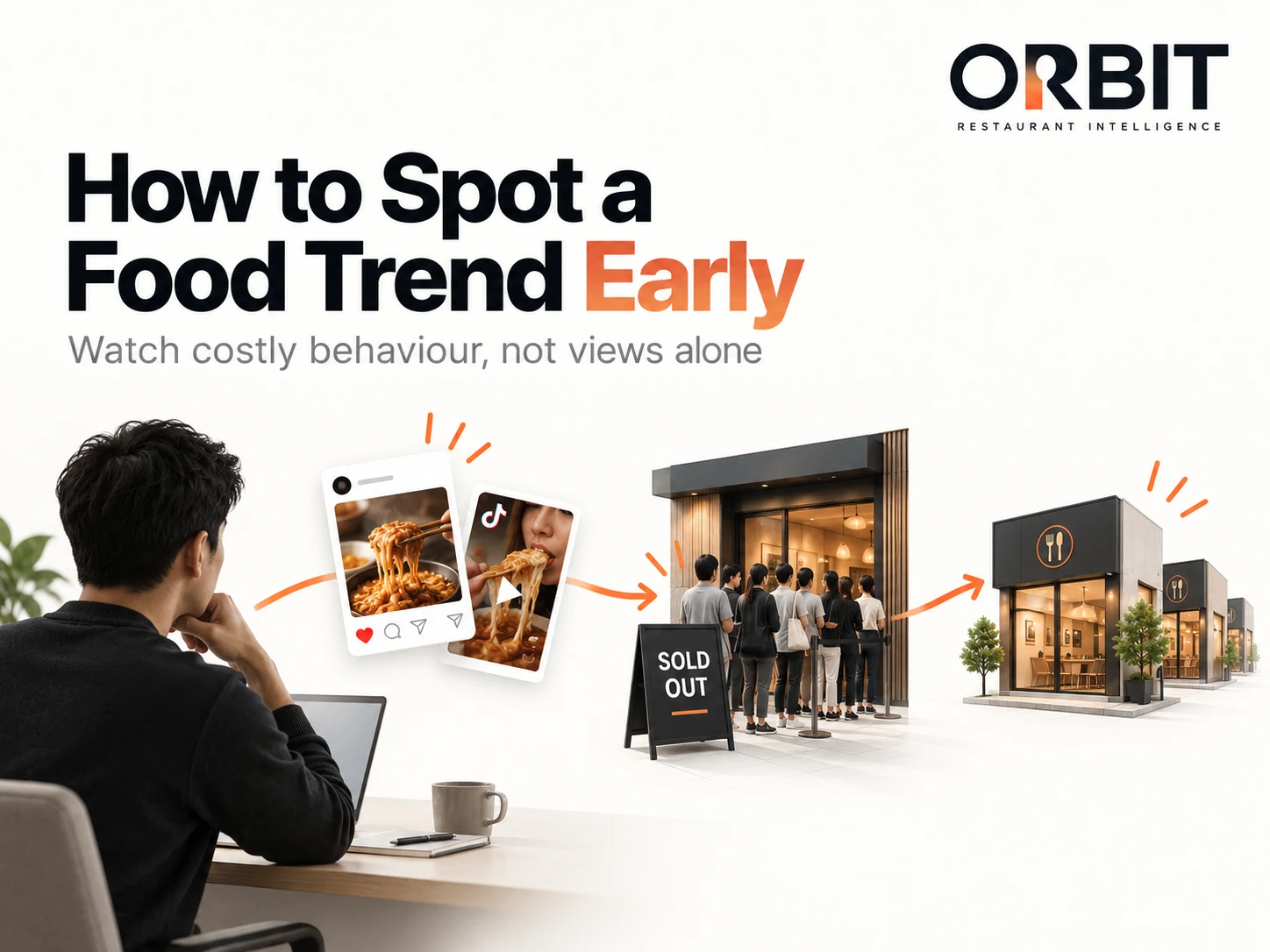
A post can win the feed and still lose the restaurant decision.

A viral post solves an attention problem. A restaurant visit requires the consumer to clear a different set of barriers: trust, relevance, price, location, timing, group agreement, dietary confidence and expected effort. That is why millions of views can coexist with weak restaurant demand.
Key takeaways
- Attention is not persuasionThe viewer can enjoy the content without wanting the product.
- Intent has multiple gatesPrice, distance, halal confidence, queue and occasion can stop conversion.
- Source mattersEngagement and trust are not the same thing.
- Measure the leakThe useful question is where people stop moving from view to search to visit.
The feed and the restaurant solve different problems
Short-form content is rewarded for capturing attention. Restaurant choice requires someone to allocate money, time and often group coordination. A piece of content can be successful because it is surprising, entertaining or controversial while the restaurant remains inconvenient or low priority.
| Content decision | Restaurant decision |
|---|---|
| Do I keep watching? | Do I spend money? |
| Do I like/share this? | Do I travel or wait? |
| Is this entertaining? | Does this fit my meal occasion? |
| Is this surprising? | Do I trust the quality/value? |
| Do I want to show someone? | Will my group agree? |
Engagement can overstate persuasion
A 2026 restaurant-marketing experiment found external influencers generated higher engagement while internal restaurant voices generated higher trust; in that study, trust rather than engagement predicted behavioural intention.1
This does not mean owner content is always superior. It means a highly entertaining creator can generate enormous engagement that should not be interpreted automatically as purchase intent.
That is why “likes per 1,000 views” and “comments per 1,000 views” are still content metrics. They become more useful when the comments themselves show intent: where, price, halal status, opening hours, reservation or comparison.
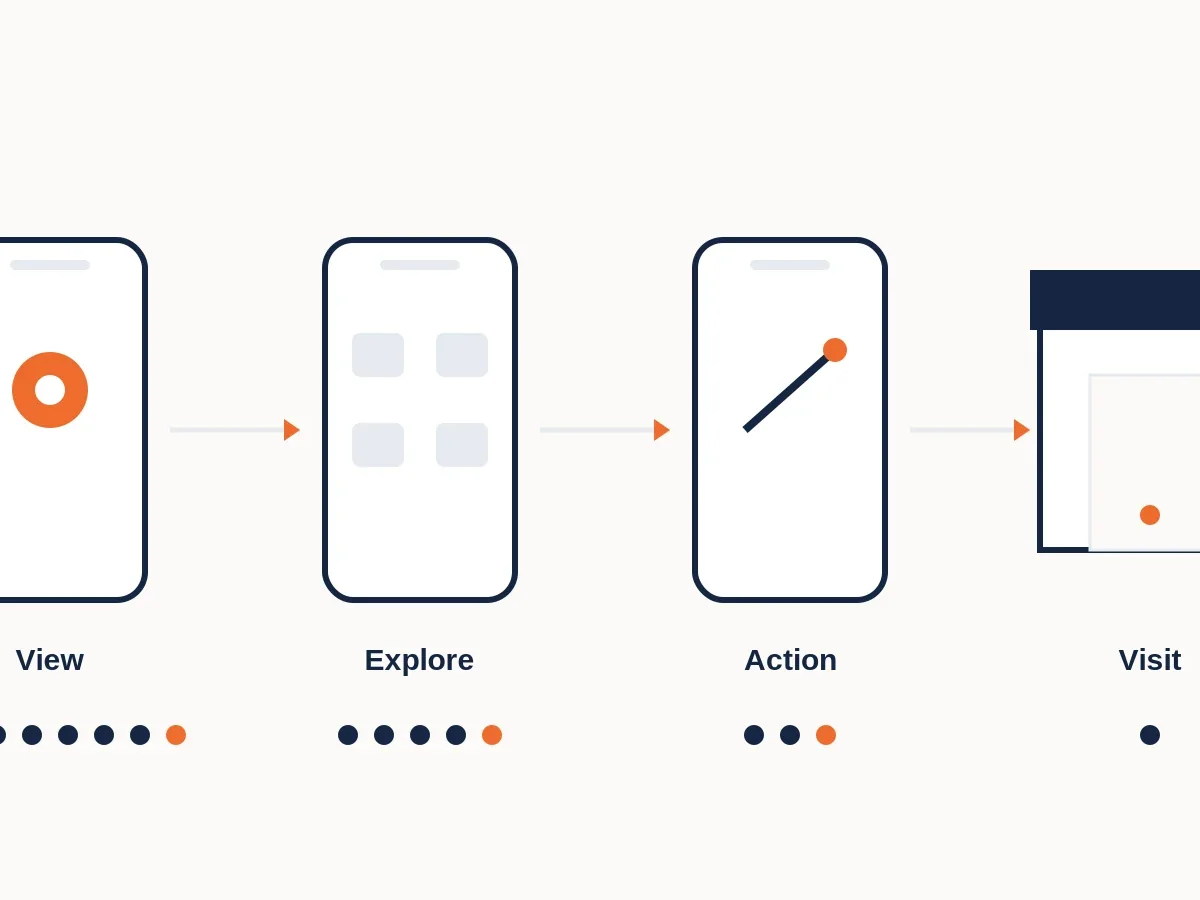
The post-to-visit funnel has multiple failure points
Active information seeking is one major transition.2 Once people search, the restaurant has to survive evaluation. Malaysian restaurant evidence shows reviews and perceived crowding can affect purchase intention, so the decision is continuously updated by new evidence.3
| Stage | Typical failure | What you would observe |
|---|---|---|
| Exposure → curiosity | Content is memorable but product proposition is weak | Views with little save/search behaviour |
| Curiosity → search | Name/product is unclear or low relevance | Generic comments but no branded queries |
| Search → consideration | Price, rating, halal, menu or location discourages trial | Search spike but weak Maps/direction actions |
| Consideration → visit | Distance, parking, queue or group veto | High intent questions but low offline proof |
| Visit → advocacy | Experience fails expectation | Reviews become mixed/negative; little customer reproduction |
What to check before buying more reach
A simple conversion audit
- Is the restaurant/product name memorable and searchable from the post?
- Can a consumer find current price, menu, location and hours in under a minute?
- Are major participation gates—halal status, ingredients, reservation, parking—clear?
- Does the post promise an experience the restaurant can actually deliver?
- Are customers travelling and reviewing, or only creators posting?
- Do reviews mention value, wait time or mismatch between hype and experience?
- Is the content reaching the audience that actually has the relevant meal occasion?
Structural-virality research gives the final warning: a huge view count can remain broadcaster-led.4 If the restaurant is not producing independent search, visits and customer activity, the problem may not be insufficient reach. The market may simply not be converting.
Four kinds of attention that look similar on a dashboard
Not all attention has the same commercial meaning.
| Attention type | Viewer motivation | Likely conversion |
|---|---|---|
| Entertainment | “This is fun to watch.” | Can be low |
| Curiosity | “What is that?” | Search may rise |
| Aspiration | “I want to experience that.” | Higher visit intent |
| Utility | “This solves a meal/value problem for me.” | Potentially strong repeat relevance |
A video can overperform because it is entertaining while the product itself has little relevance to the viewer’s real dining occasions. That is one reason content performance and restaurant performance can diverge sharply.
Restaurant conversion depends on the moment
The same person can react very differently to the same restaurant depending on occasion. A product may be compelling for Saturday night with friends and irrelevant for a rushed weekday lunch. That means “the audience liked the video” is still too broad.
When diagnosing weak conversion, ask whether the content reached people during the right decision context and whether the restaurant fits the occasion they actually have. This is especially important for premium desserts, destination restaurants and group dining, where the behavioural commitment is higher than a convenience meal.
Diagnose the leak before changing the content
If a restaurant repeatedly gets reach without visits, diagnose the first broken transition.
| Observed pattern | Likely issue to investigate |
|---|---|
| Views high, search low | Weak proposition or low relevance |
| Search high, Maps low | Information, location, price or trust friction |
| Maps high, visits weak | Access, parking, hours, queue or group-fit problem |
| Visits high, advocacy weak | Experience fails expectation |
| Advocacy high, repeat weak | Novelty works, routine value may be weak |
This is much more actionable than “make better content.” Each pattern points to a different business problem.
A post can attract the wrong kind of intent
High-performing food content can attract people who love food videos but are not realistic customers for the restaurant. They may live too far away, dislike the price point, have no relevant dining occasion, or simply enjoy watching extreme food they would never order.
This creates a targeting problem that engagement statistics can hide. A video may look successful because it reaches a broad entertainment audience while the local restaurant needs a much narrower audience with geographic access and the right occasion.
That is why location distribution, search geography and actual customer composition matter. The restaurant should not optimise only for people most likely to watch. It should understand the people most likely to choose.
Research notes & sources4 sources
How this article was researched
This article separates content engagement from restaurant-choice behaviour using restaurant influencer evidence, information-seeking research and Malaysian crowd/review evidence.
- Internal vs external influencers in restaurant marketing
2026 experiment (N=300). External creators generated more engagement; internal voices generated more trust, and trust predicted behavioural intention. - Product diffusion through on-demand information-seeking behaviour
Large field experiment seeded 70,000 vouchers into a network of about 43 million people; active information seeking produced distinctive winner-take-all diffusion. - Online reviews and crowd cues in Malaysian restaurant choice
Malaysian restaurant study (N=200). Review ratings and perceived crowding positively affected purchase intention. - Goel et al. — The Structural Virality of Online Diffusion
Management Science, 2015. Analyses roughly one billion Twitter diffusion events and separates large broadcast from multi-generation diffusion.
What this research cannot proveLimitations
Without campaign-level transaction and search data, a public observer cannot reliably estimate the conversion rate from a viral post. Low visible queues also do not prove low sales if delivery, reservations or throughput differ.